


Moog Matriarch





Een maand lang gratis volledige toegang tot Syntorial – leer synth programmering alsof het een video game is
Als je dit product tussen 15.07.2026 en 15.10.2026 koopt, ontvang je een gratis proefperiode van 30 dagen met volledige toegang tot Syntorial, de interactieve gehoortrainingssoftware voor synthesizer-programmering.
In plaats van alleen maar video’s te bekijken, creër je opnieuw zelf Leads, Bassen, Pads en meer. Krijg direct feedback terwijl je leert hoe Oscillatoren, Filters, Modulatie en Effecten samenwerken om echte patches te creëren.
Je persoonlijke vouchercode wordt na je bestelling automatisch per e-mail verzonden. Geen creditcard nodig. De proefperiode eindigt automatisch na afloop. Houd er ajb rekening mee dat de software alleen in het Engels beschikbaar is
Dit leeraanbod is beschikbaar in het Duits, Engels, Frans, Spaans en Japans.
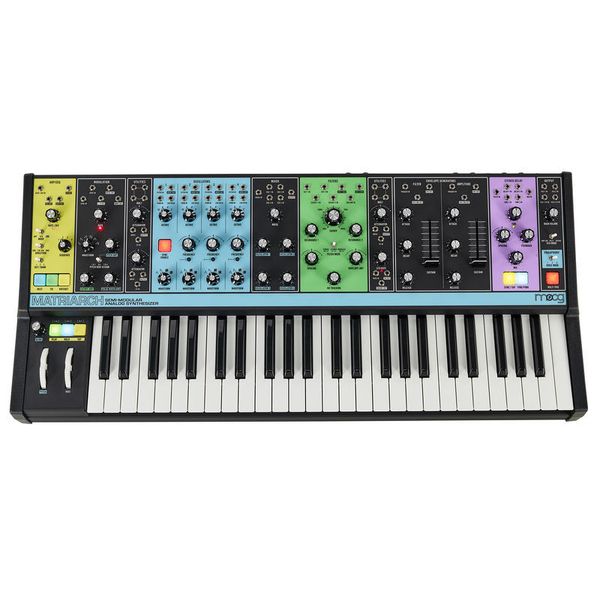
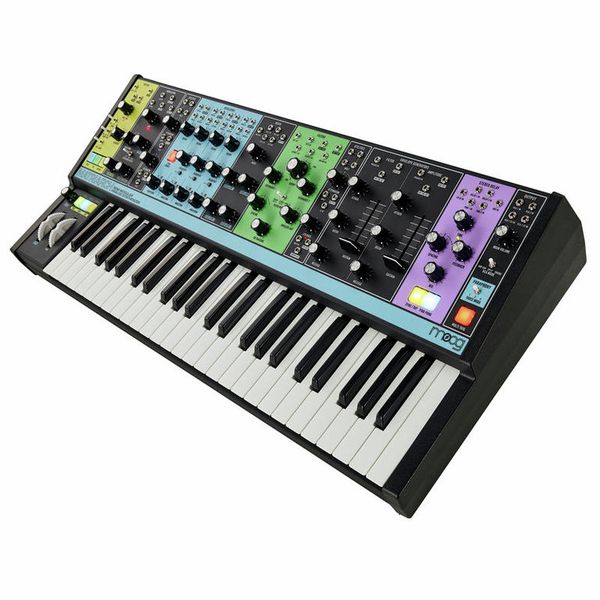
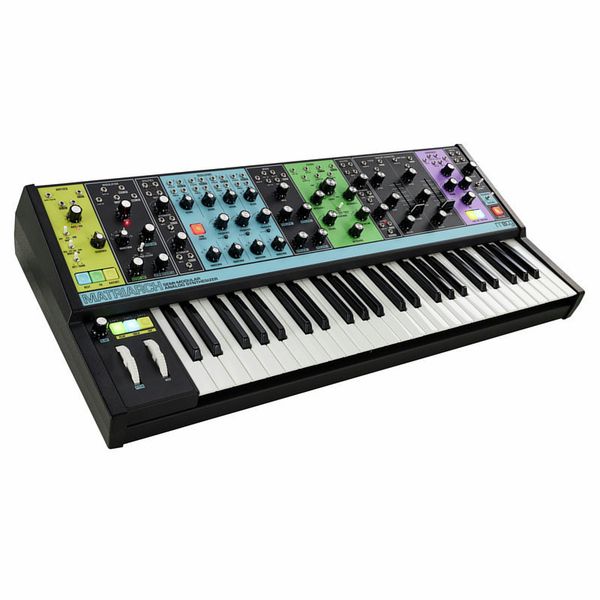
4-Stemmige paraphone semi-modulaire synthesizer met patch-optie
- Analoge klankgeneratie
- 256-Step sequencer
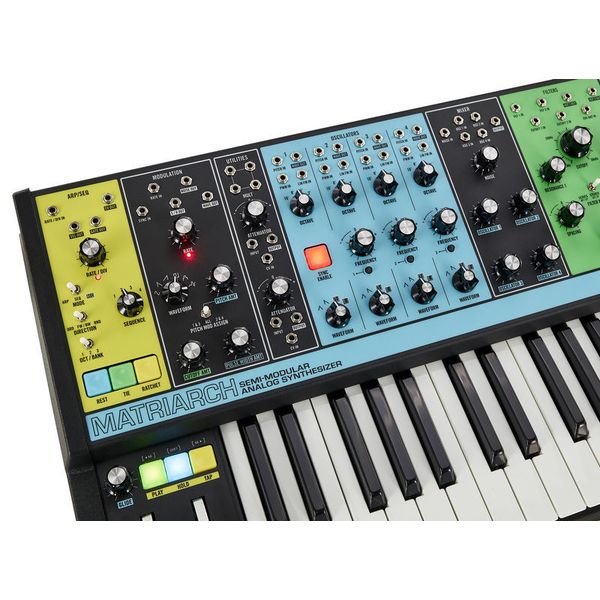
- Arpeggiator
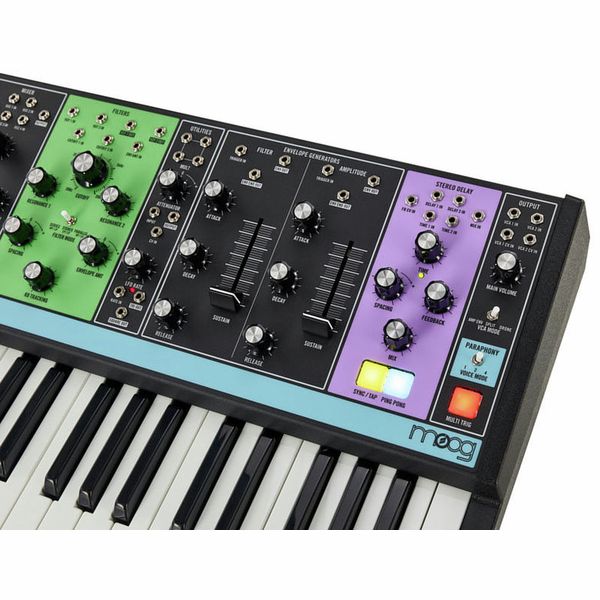
- Stereo ladder-filter en stereo-analoge delay
- Gebaseerd op de schakelingen van de Moog-modulaire synthesizer
- 4 Analoge oscillatoren met selecteerbare golfvormen
- Mixer met 6 ingangen
- 2 Vierfasige ADSR
- 3 Bipolaire spanningsgestuurde dempers met ringmodulatie-mogelijkheden
- 2 Discrete analoge stereo gerouteerde VCA's
- 49-Toetsen keyboard met aftertouch via MIDI, KBD VEL OUT en KB AT OUT aansluitingen
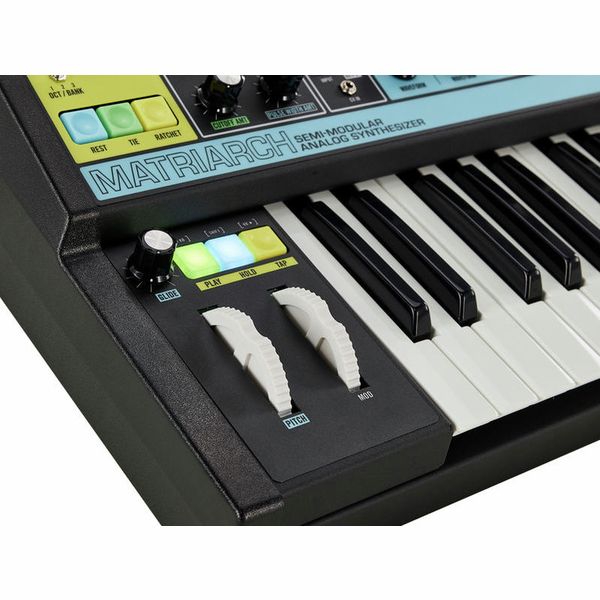
- Pitch en modulation wielen
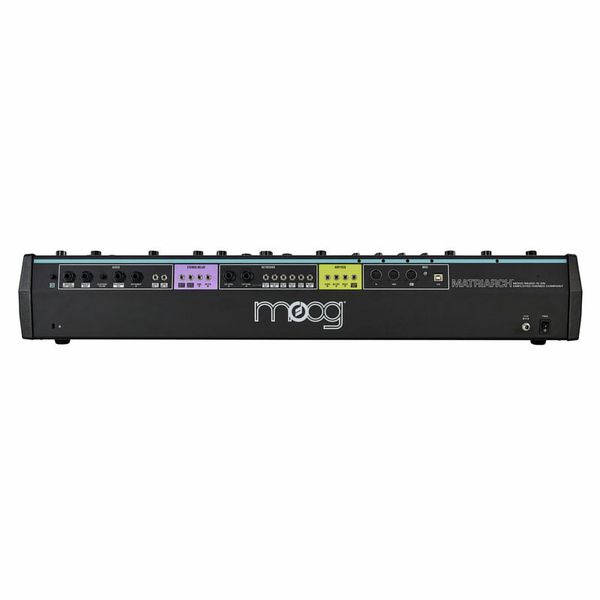
- 90 Patch-punten 3,5 mm jack aan de voor- en achterzijde
- Afmetingen (B x H x D): 813 x 140 x 362 mm
- Gewicht: 10,9 kg
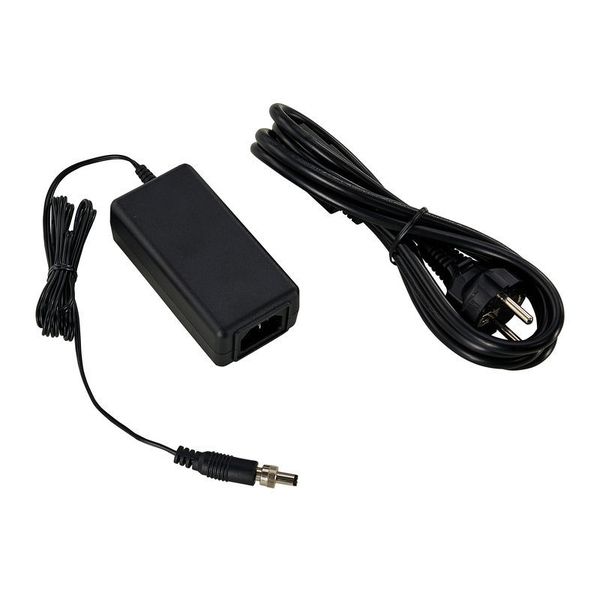
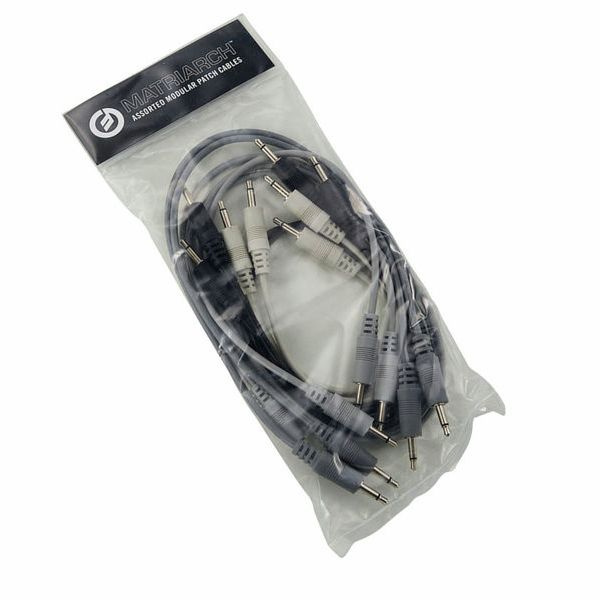
- Incl. patchkabel en externe 12 V netadapter
- Bijpassende koffers: Art. 489955 en Art. 479619 (beide niet inbegrepen bij de levering)
- Passende tas: Art. 489808 (niet bij levering inbegrepen)
Aansluitingen:
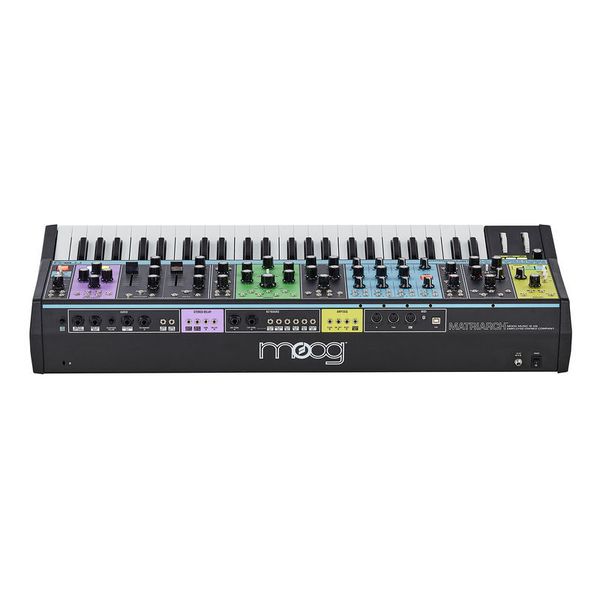
- 2 Line uitgangen: 6,3 mm jack
- Stereo hoofdtelefoonuitgang: 6,3 mm jack
- 2 Uitgangen: 3,5 mm mini-jack
- Delay 2 uitgangen en sync- en CV-ingang: 3,5 mm mini-jack
- Arpeggiator/sequencer clock-ingang/on-off-ingang/reset en clock-uitgang: 3,5 mm mini-jack
- Instrumentingang: 6,3 mm jack
- MIDI In/Out/Thru
- Expression-pedaal naar CV
- Sustain-pedaal ingang
-
Leverbaar sinds Oktober 2019
-
artikelnummer 465313
-
verkoopseenheid 1 stuk
-
Number Of Keys 49
-
Touch-Sensitive Yes
-
Aftertouch Yes
-
Split Zones No
-
Modulation Wheel Yes
-
Number of simultaneous Voices 4
-
Sound Engine Analogue
-
MIDI interface 1x In, 1x Out, 1x Thru
-
Storage Medium None
-
USB-port Yes
-
Effects Delay
-
Arpeggiator Yes
-
Number of Analog Outputs 2
-
Digital Output No
-
Display No
-
Pedal Connections 1x Pedal, 1x Sustain
-
Dimensions 813 x 140 x 362 mm
-
Weight 10,9 kg
-


A paraphonic purist
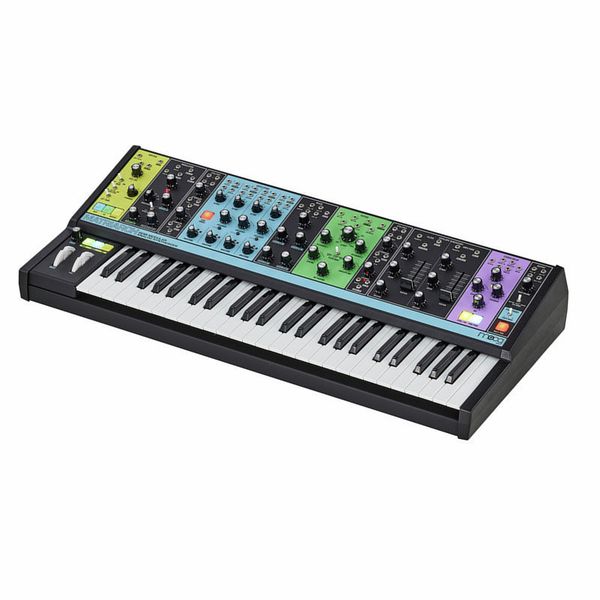
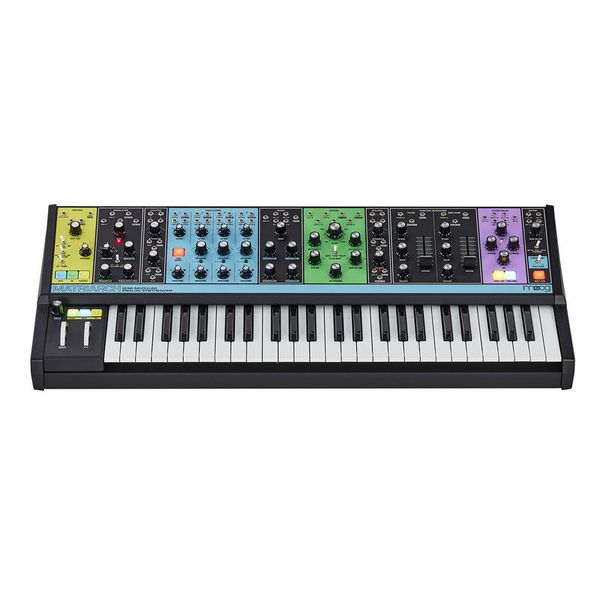
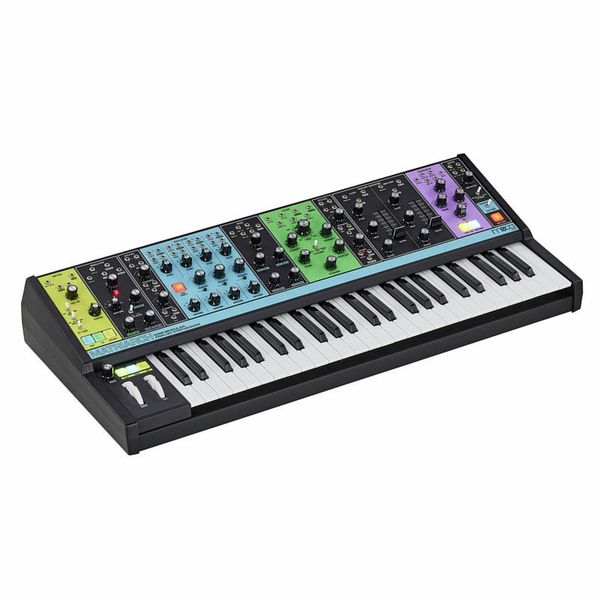
The Moog Matriarch is the enhanced version of the semi-modular Moog Grandmother. In contrast to the monophonic Grandmother, however, the Matriarch has four voices. The semi-modular design has been adopted almost exactly; instead of 41 patch points, the Matriarch has 90, and the system is similarly compatible with the other (semi-)modular Moog products and other modular synthesizers. The four analogue oscillators and the classic ladder filter are based on the old Moog modular systems, as are many aspects of the design. The whole thing comes in the usual solid and very stylish housing with a high-quality 49-key Fatar keyboard. There are no digital frills on the Matriarch, and no presets either: What you see is what you get.

)
A matriach, not a mummy's boy
In addition to the oscillators and filters mentioned above, the Moog Matriarch features an analogue stereo bucket brigade echo that mirrors the unit's retro visual aesthetic. Nevertheless, the Matriarch also has a few modern features in store. On the back, for example, there is a USB connection next to the 5-pin MIDI connections. On the front, Moog offers an arpeggiator as well as a sequencer, which offers more than enough space even for the most extensive melody featuring 256 steps. As befits a modularly designed device, the classic utilities can also be found there – a signal splitter (Mult) and an attenuator, with which control signals can be amplified or attenuated.
An analogue purist, no digital frills
One thing should be clear: Like any Moog, the sound of the Matriarch is beyond reproach. If you buy a Moog, you get the Moog sound and if you want the Moog sound, you buy a Moog. It's as simple as that. That said, the Matriarch is no Swiss army knife – it's an analogue purist, no digital frills. Thanks to its paraphonic function, keyboardists will get their money's worth, and those who already have a modular system will find the Moog Matriarch a control centre for all eventualities. For example, an external sequencer can be integrated with ease, and the Matriarch's keyboard virtually demands to be used to control a modular system via CV and gate.
)
About Moog
The US manufacturer of synthesizers, based in Asheville, North Carolina, is one of the pioneers in this field and has legendary status. Robert Moog had been involved with electronic sound generation since the 1950s and his first experience was with the manufacture of theremins. The breakthrough came in 1968 with the Grammy-winning album "Switched-On Bach" by musician Wendy Carlos (then know as Walter Carlos), recorded in multitrack with a mono synthesizer. The Minimoog, released in 1971, became the most popular synthesizer of the 1970s and is still considered the benchmark for the quality of synthesised sounds. It and the following devices, like the Memorymoog, Polymoog, and Prodigy, shaped the sound of numerous albums, from Stevie Wonder to The Police and from Saga to Kraftwerk.
)
The sound lab
In contrast to "modern" models, Moog follows an almost minimalist approach with the Grandmother and Matriarch, one in which digital flourishes are largely avoided. The Matriarch is the no-nonsense version of a polyphonic Moog. Anyone looking for a versatile sound laboratory for tinkering and interconnecting will find exactly that here. With the Matriarch, Moog has expanded the functional range of the Grandmother by several dimensions – but it's also a work of art in its own right, with real character and an appealing retro design. If you didn't know that this was a synth from such a well-known company, you might get the impression that you were looking at a sinfully expensive custom boutique synth.