


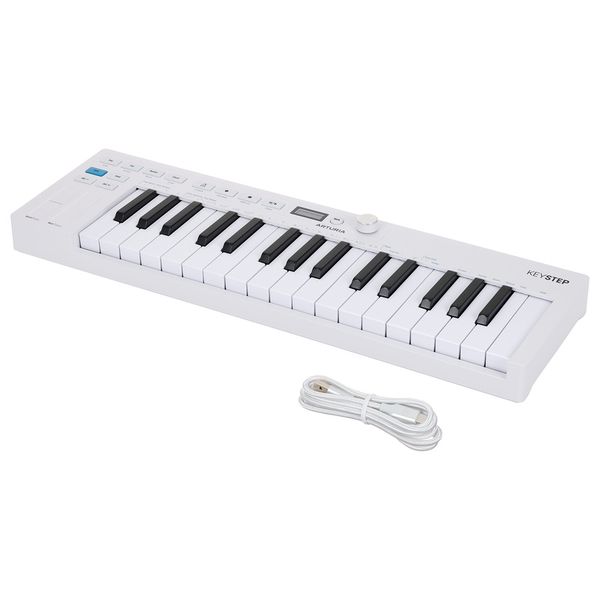
Arturia KeyStep mk2




Inclusief 3 maanden full access tot ArtMaster.com – uw online muziekplatform voor muziekproductie, songwriting en virale muziekcreatie in TikTok-stijl.
Bij aankoop van dit studio product ontvang je een gratis 3 maanden voucher ter waarde van 59 euro, geldig van 15.07. tot 14.10.2026, waarmee je volledige toegang krijgt tot premium online cursussen over moderne productietechnieken, beat-making, vocale bewerking, creatieve workflows en content-ready geluidsontwerp.
ArtMaster.com – uw e-learning partner, ontwikkeld in samenwerking met professionals uit de branche, zoals Sam Pounds (Chris Brown, Dr. Dre), Printz Board (Black Eyed Peas, Justin Timberlake) en Chris Kasych (Adele, Beck, Pharrell Williams). Leer van meer dan 500 videolessen die zijn ontwikkeld voor producers, creators en songwriters, met onderwerpen als DAW-productie, de basisprincipes van mixen, arrangementen, hooks voor TikTok en belangrijke vaardigheden om ideeën om te zetten in tracks die klaar zijn voor release.
Dit leeraanbod is beschikbaar in het Engels.
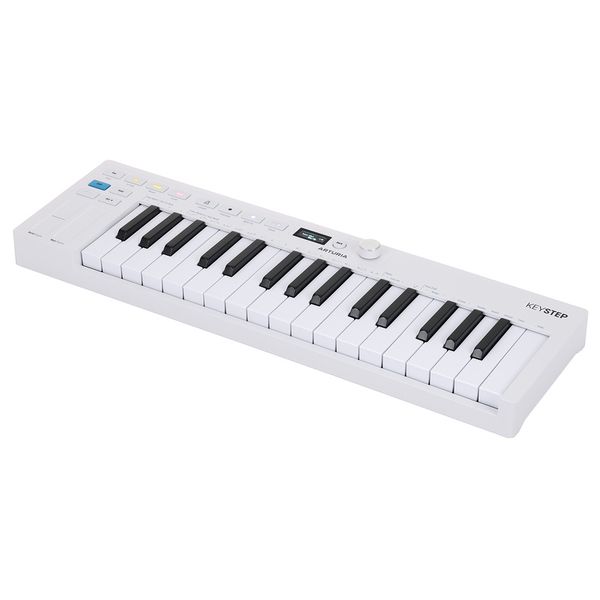
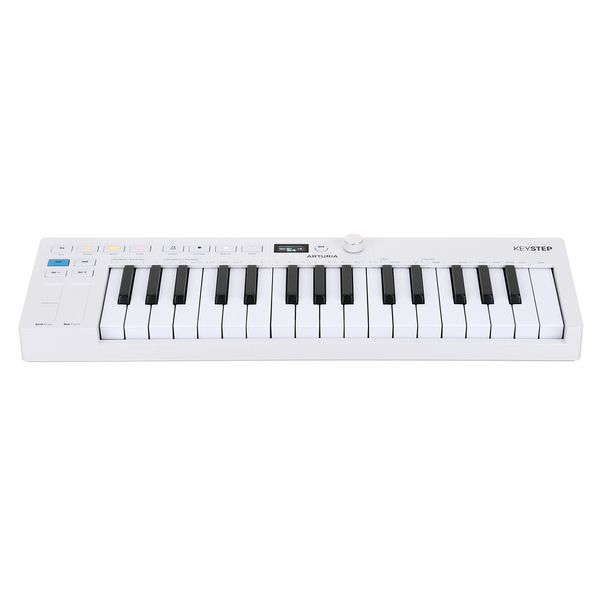
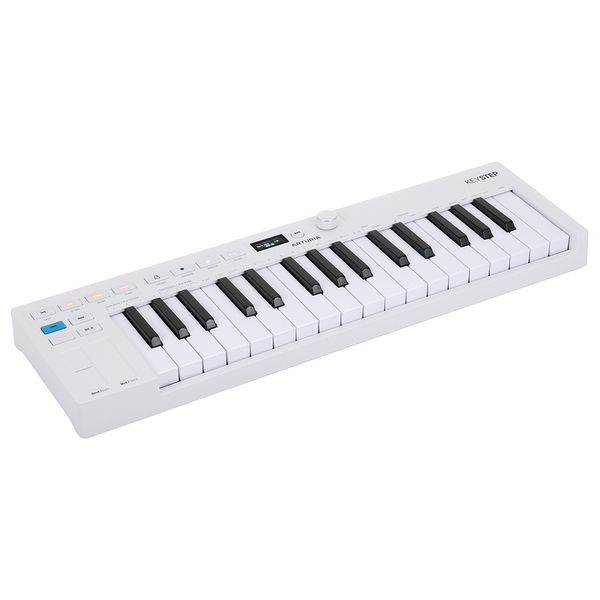
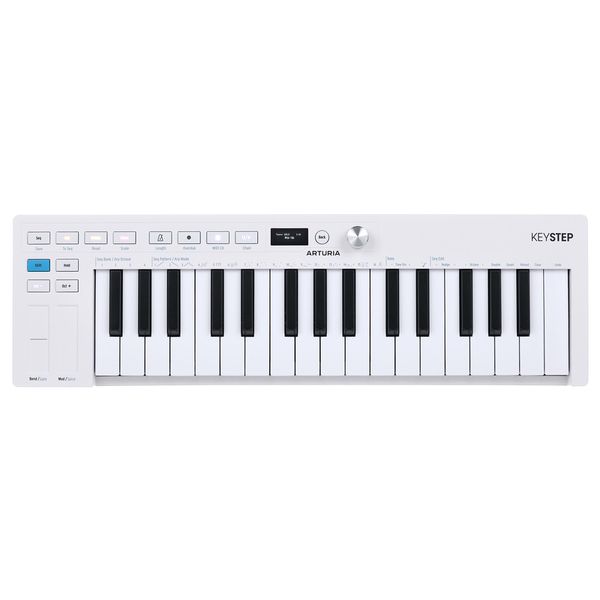
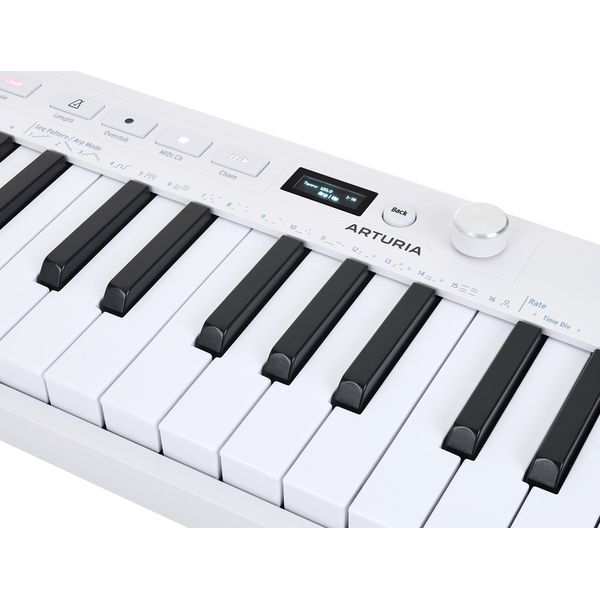
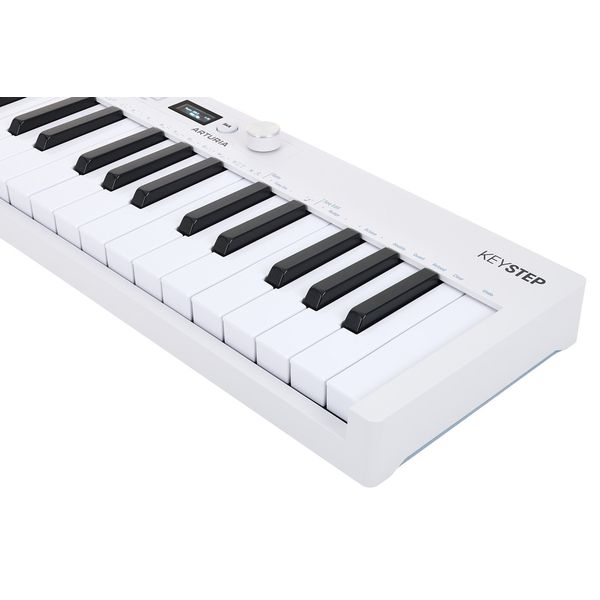
USB/MIDI controller keyboard
- 32 Aanslaggevoelige Slimkey toetsen met Aftertouch
- OLED-display met push-encoder
- Polyfone step sequencer met maximaal 64 steps, pattern-chaining en mutate-functie
- 16-Mode arpeggiator incl. phrase arp
- Chord en scale modus
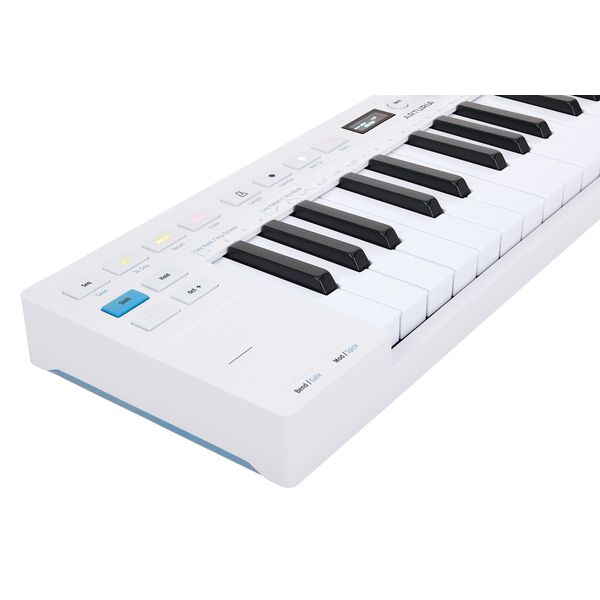
- Touch-strips voor pitchbend en modulation en live controls
- USB bus-powered
- Kensington lock
- Software (download): Analog Lab Intro, Ableton Live Lite
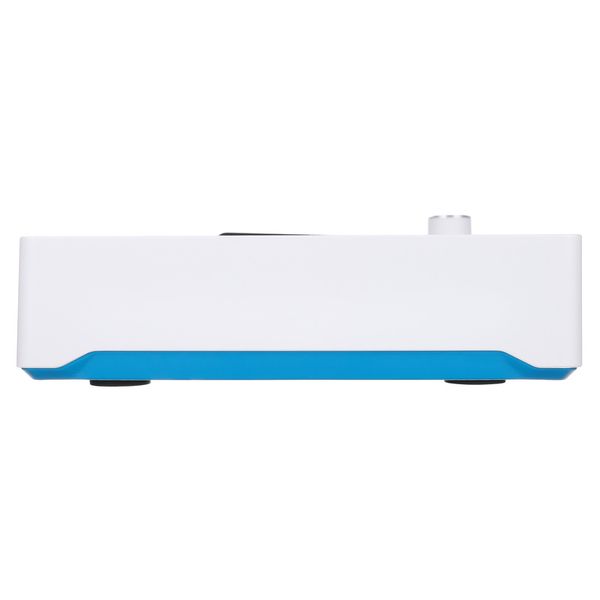
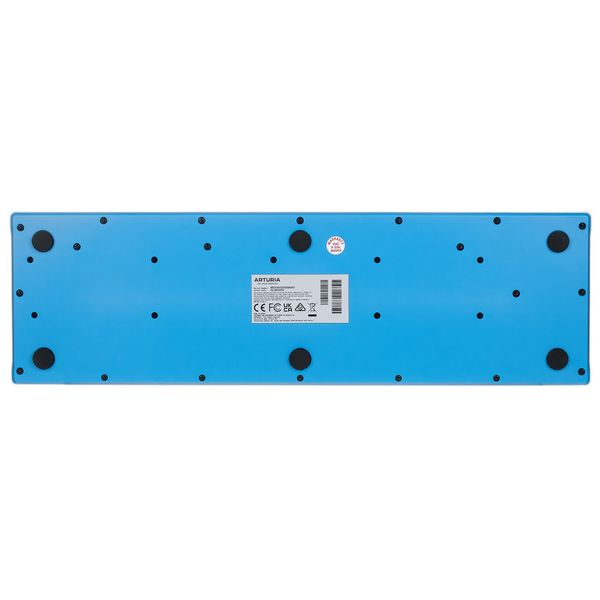
- Afmetingen (B x D x H): 484 x 145 x 50 mm
- Gewicht: 1,1 kg
- Incl. USB-C kabel
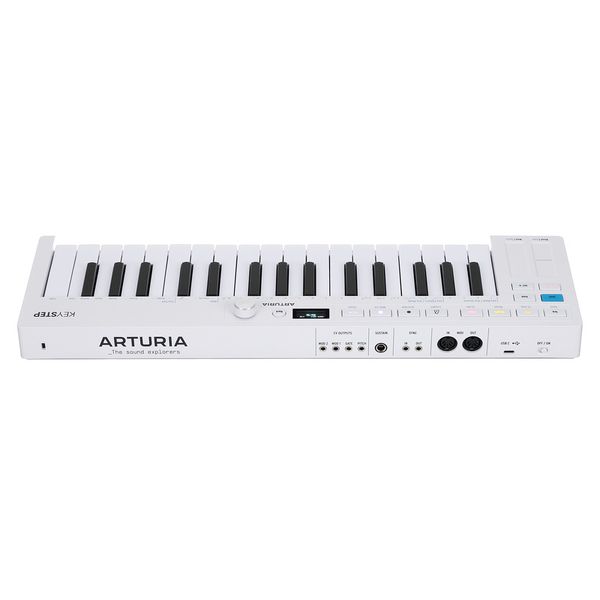
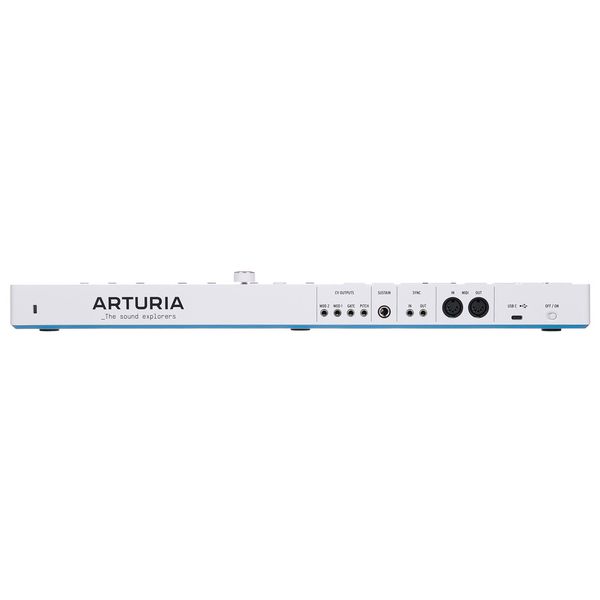
Aansluitingen:
- MIDI ingang/uitgang: 5-pins DIN
- Sync ingang/uitgang: 3,5 mm mini-jack
- CV/Gate: 4 x 3,5 mm mini-jack
- Sustain-pedaal ingang: 6,3 mm jack
- USB-C
-
Leverbaar sinds November 2025
-
artikelnummer 629213
-
verkoopseenheid 1 stuk
-
Number of Keys 32
-
Hammer Action Keys No
-
Aftertouch Yes
-
Split Zones 0
-
Layer function No
-
Pitch Bend / Modulation Yes
-
Rotary Encoder 1
-
Fader 0
-
Pads 0
-
Display Yes
-
MIDI Interface 1x In, 1x Out
-
Sustain Pedal Connection Yes
-
USB-port Yes
-
Mains Operation No
-
Battery Operation No
-
Bus-Powered Yes
-
Width in mm 484
-
Height in mm 50
-
Depth in mm 145
-
Weight in kg 1,1 kg
-
Special Features Software (Download): Analog Lab Intro, Ableton Live Lite;
-
MIDI controller and sequencer
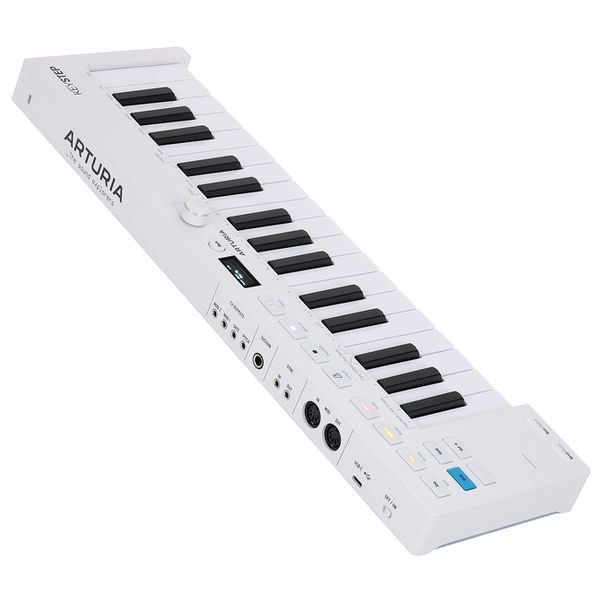
Arturia's KeyStep mk2 is a compact 32-note controller and polyphonic sequencer designed for hybrid modular, hardware, and software setups. Building on the format that made the original KeyStep so widely adopted, the mk2 refines the concept with deeper sequencing tools, an OLED display, and expanded connectivity. Its Slimkey keyboard is velocity- and aftertouch-sensitive, while pitch and modulation touch strips provide direct hands-on control. At its core lies a 64-step polyphonic sequencer with up to eight notes per step, alongside a 16-mode arpeggiator that ranges from classic patterns to more generative structures. Rather than functioning purely as a compact MIDI keyboard, KeyStep mk2 operates as a focused sequencing instrument – capable of sketching ideas, developing them into structured sequences, and deploying them into broader studio or live configurations.

)
Sequencing architecture and generative control
KeyStep mk2 is built around a polyphonic step sequencer capable of recording or programming up to 64 steps of eight-note polyphony. Sequences can be overdubbed, quantised, time-shifted and chained – then stored across four banks of 16 slots each. The OLED display and push-encoder replace the original knob-led interface and allow detailed editing directly from the hardware. Its 16-mode arpeggiator includes classic up, down, and random variations alongside pattern-based modes that introduce defined rhythmic phrasing and variation. The dedicated Mutate function reshapes patterns while preserving their core character, introducing subtle evolutions rather than arbitrary change. Additional performance tools – including Gate and Spice strips, plus automation recording of pitch and modulation – allow sequences to evolve dynamically over time.
)
Designed for hybrid performers and modular systems
KeyStep mk2 is aimed at musicians working across modular, hardware, and DAW-based systems who seek sequencing depth without increasing their footprint. It suits producers developing melodic ideas away from the screen, Eurorack users seeking hands-on CV control, and electronic performers building patterns in real time. While less immediate than its predecessor's knob-led design, the mk2 rewards deeper interaction: Sequences can be captured, refined, mutated, saved and reworked into longer arrangements. Chord and scale modes further expand the harmonic possibilities, supporting structured composition from a compact keyboard. For studio environments where ideas are crafted and revisited rather than quickly demonstrated, KeyStep mk2 functions as a focused compositional tool rather than simply a controller.
)
About Arturia
Arturia's success story began with software emulations of well-known analogue synthesizers such as the Moog Minimoog, Sequential Prophet-5, and Oberheim SEM. The popular software instruments included in the V Collection are still flagship products of the French developer today. Over time, Arturia has gradually expanded its range and now also offers a host of hardware devices, ranging from synthesizers and keyboard controllers to sequencers. Since then, the former software developer has thus also become a household name in the world of analogue synthesizers and other equipment.
Connectivity and integration
Connectivity is central to Arturia's KeyStep concept. USB-C supplies power and links the controller to DAW environments, while full-size MIDI DIN In and Out drive external hardware. 3.5mm Sync In/Out ensures stable synchronisation with vintage and modern gear alike. Four CV outputs – pitch, gate, modulation, plus an additional assignable mod output – enable direct control of modular systems, with MIDI-to-CV conversion allowing external keyboards, sequencers, and Eurorack systems to be routed through the KeyStep. The pedal input supports sustain or expression pedals, extending performance possibilities. Whether configured as a master clock or central routing hub, KeyStep mk2 connects analogue and digital signal paths within a compact unit, keeping complex setups synchronised and stable.
)
In the spotlight
A complete production starter suite
Arturia's KeyStep mk2 ships with a compact starter software package designed to complement its hardware sequencing capabilities. Analog Lab Intro provides access to 500 curated presets drawn from Arturia's instrument catalogue, offering a broad range of synth, keyboard, and hybrid sounds with selected macro controls for immediate use. Ableton Live Lite delivers a streamlined version of Ableton's production environment for recording, arranging and exporting within a DAW workflow. The Arturia Software Center manages firmware updates and software installation, keeping the controller and its companion instruments current. As bundled software may evolve over time, the manufacturer's website should be consulted for the most up-to-date package details.
)
Accessoires & verwante producten



Vergelijk opties
-
Arturia masterkeyboards tot 49 toetsen in een oogopslag
-
masterkeyboards tot 49 toetsen in de prijscategorie van 100 € - 140 € weergeven
-
naar productgroep masterkeyboards tot 49 toetsen
-
naar productgroep MIDI masterkeyboards
-
naar productgroep Toetseninstrumenten
-
toon fabrikant details voor Arturia
-
Arturia Toetseninstrumenten in een oogopslag