


Polyend Synth



Een maand lang gratis volledige toegang tot Syntorial – leer synth programmering alsof het een video game is
Als je dit product tussen 15.07.2026 en 15.10.2026 koopt, ontvang je een gratis proefperiode van 30 dagen met volledige toegang tot Syntorial, de interactieve gehoortrainingssoftware voor synthesizer-programmering.
In plaats van alleen maar video’s te bekijken, creër je opnieuw zelf Leads, Bassen, Pads en meer. Krijg direct feedback terwijl je leert hoe Oscillatoren, Filters, Modulatie en Effecten samenwerken om echte patches te creëren.
Je persoonlijke vouchercode wordt na je bestelling automatisch per e-mail verzonden. Geen creditcard nodig. De proefperiode eindigt automatisch na afloop. Houd er ajb rekening mee dat de software alleen in het Engels beschikbaar is
Dit leeraanbod is beschikbaar in het Duits, Engels, Frans, Spaans en Japans.

Inclusief 3 maanden full access tot ArtMaster.com – uw online muziekplatform voor muziekproductie, songwriting en virale muziekcreatie in TikTok-stijl.
Bij aankoop van dit studio product ontvang je een gratis 3 maanden voucher ter waarde van 59 euro, geldig van 15.07. tot 14.10.2026, waarmee je volledige toegang krijgt tot premium online cursussen over moderne productietechnieken, beat-making, vocale bewerking, creatieve workflows en content-ready geluidsontwerp.
ArtMaster.com – uw e-learning partner, ontwikkeld in samenwerking met professionals uit de branche, zoals Sam Pounds (Chris Brown, Dr. Dre), Printz Board (Black Eyed Peas, Justin Timberlake) en Chris Kasych (Adele, Beck, Pharrell Williams). Leer van meer dan 500 videolessen die zijn ontwikkeld voor producers, creators en songwriters, met onderwerpen als DAW-productie, de basisprincipes van mixen, arrangementen, hooks voor TikTok en belangrijke vaardigheden om ideeën om te zetten in tracks die klaar zijn voor release.
Dit leeraanbod is beschikbaar in het Engels.
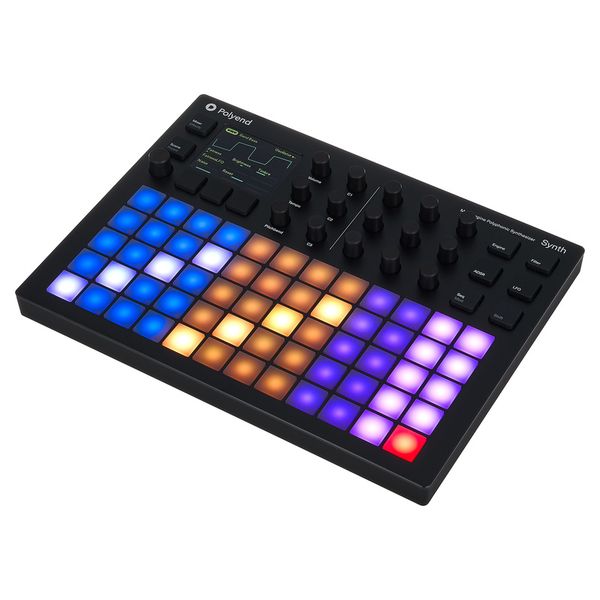
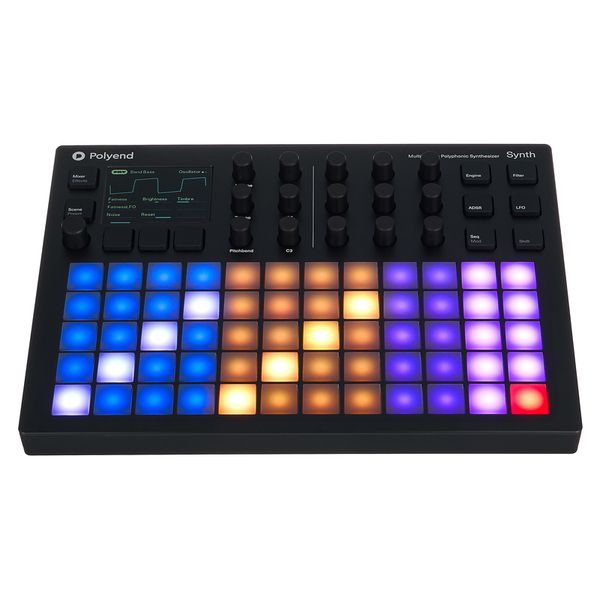
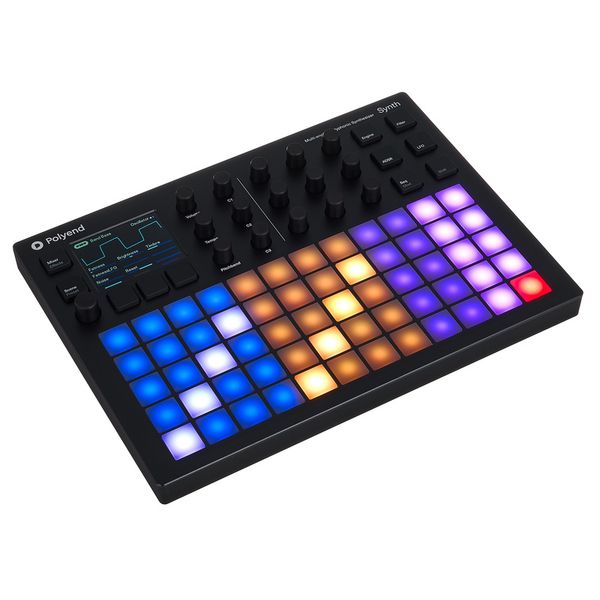
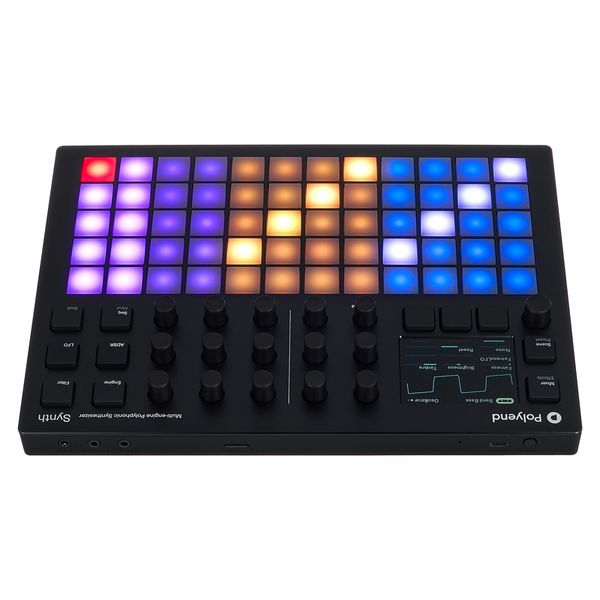
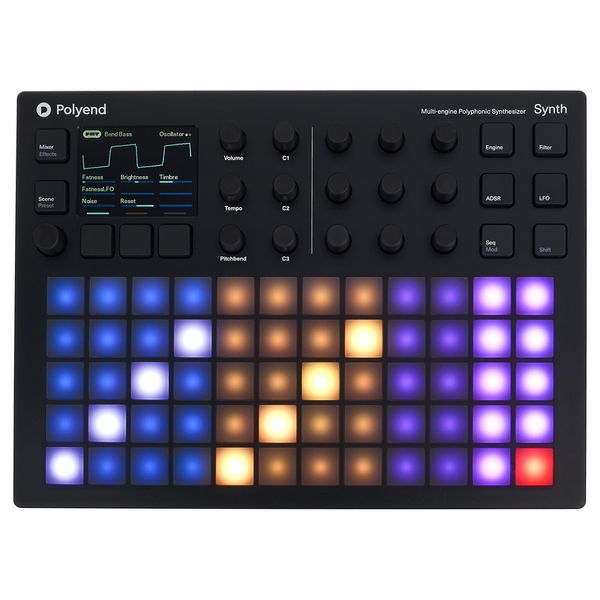
Polyfone multi engine synthesizer
- 3 Onafhankelijke en volwaardige synthesizer voices (Synth 1-3) kunnen tegelijkertijd worden afgespeeld
- Intuïtief spelen van alle 3 synthesizer voices tegelijkertijd dankzij de geïntegreerde sequencer, arpeggiators en Smart Grid
- Acht synth engines selecteerbaar per synth: PHZ - phase distortion synthesis, PMD - physical modeling, GRAIN - granular engine, WAVS - wavetable, VAP - polysynth met twee oscillatoren voor pad-sounds, FAT - synth met drie oscillatoren en vintage ladder-filters voor bass en lead sounds, ACD - monofone vintage synths of WTFM - FM synthesis engine
- Drie aanpasbare effecten per synth: modulatie-effecten, delay en reverb
- Polyfonie: 8-noten over 3 synth-engines
- 2x LFO's per engine, 6 per scène
- Filters: low-pass x4, high-pass 4x, band-pass x4, notch x2
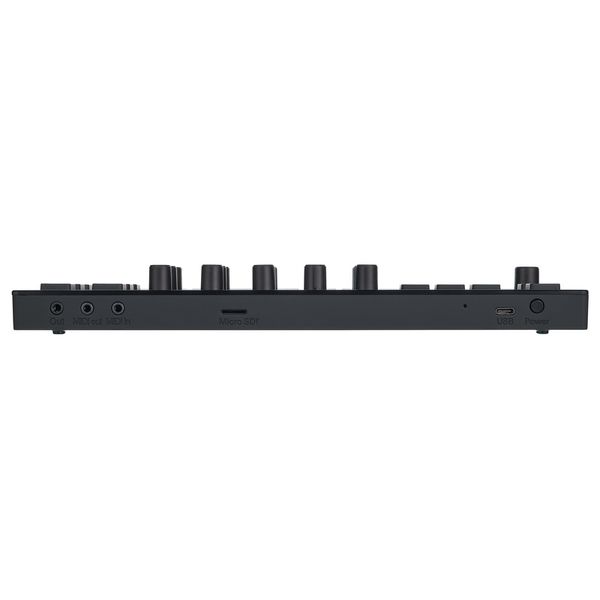
- MIDI ingang via USB en TRS-B MIDI
- 8-Stemmige polyfone aftertouch
- Aftertouch toewijzingen van 5 parameters per synth-engine
- Afmetingen: 275 x 213 x 37 mm
- Gewicht: 1,8 kg
-
Leverbaar sinds November 2024
-
artikelnummer 603957
-
verkoopseenheid 1 stuk
-
Touch-Sensitive Yes
-
Aftertouch Yes
-
Split Zones Yes
-
Modulation Wheel No
-
Number of simultaneous Voices 8
-
Sound Engine Digital
-
Storage Medium MicroSD
-
USB-port Yes
-
Effects Modulation, Reverb, Delay
-
Arpeggiator Yes
-
Number of Analog Outputs 1
-
Digital Output No
-
Display Yes
-
Pedal Connections None
-
Dimensions 27,5 x 21,25 x 3,75 cm
-
Weight 1,8 kg
-
Chords, lines, and pads – in one box
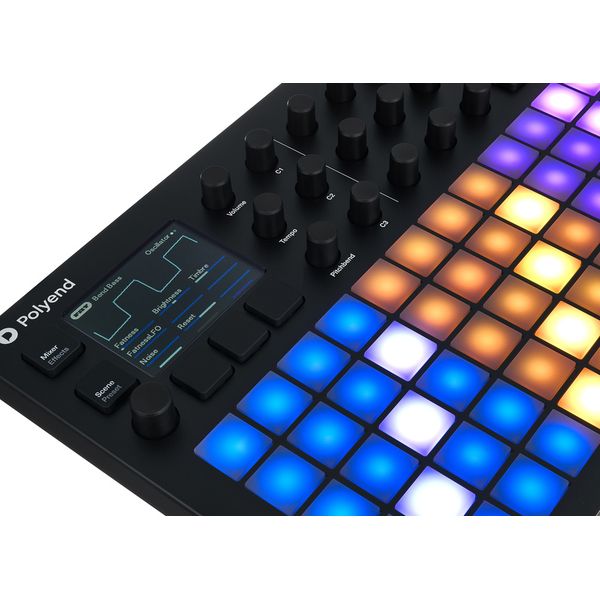
Grooveboxes are often sample-based and primarily intended for beat-making. The Polyend Synth – a groovebox that's specifically designed with pads, sequences, and melodies in mind and thus equipped with synthesizer engines, a step sequencer, and an easy-to-use chord function – is the perfect complement to these devices. This makes it a great bandmate for more beat-oriented grooveboxes like the Polyend Tracker+ and Play+. Of course, the Polyend Synth's sounds can be still played using its pads in the familiar groovebox style. With its macro controls, an integrated mixer with master effects, and an excellent selection of presets, the Synth – like all Polyend devices – is built for live performance, improvisation, and an intuitive, uninterrupted workflow. Sequences can be created at the flick of a switch, and sounds adjusted by spinning a few dials. That's not to say that the Poly Synth is a superficial groovebox; on the contratry, it gives users new, in-depth ways to edit sounds, chords, and grid setups, allowing all these elements and more to be shaped according to individual preferences.

)
Multi-engine synthesis
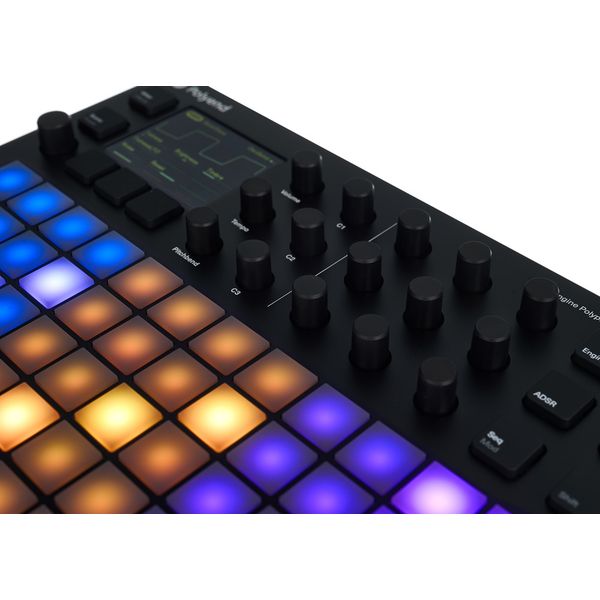
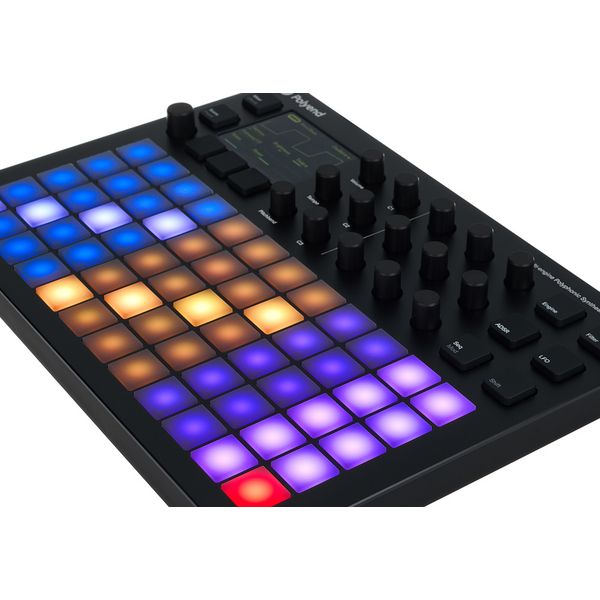
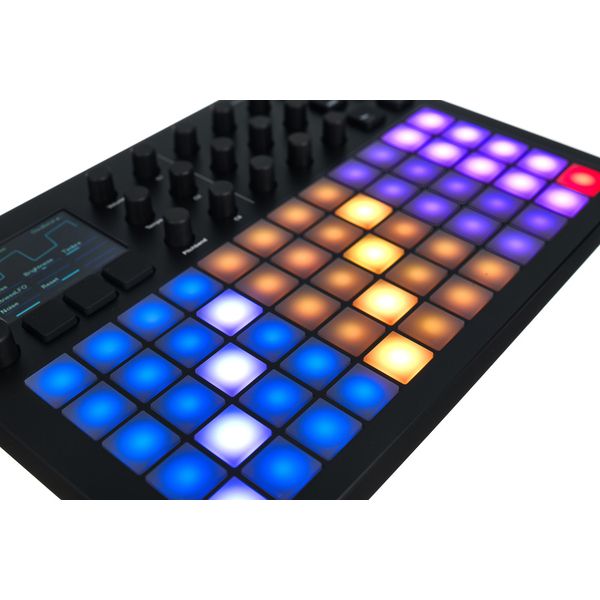
The Polyend Synth's engines have different synthesis methods, so its spectrum ranges from virtual analogue sounds to FM, phase distortion, physical modeling, and granular or wavetable synthesis. An update recently added a sample-based engine. Users can also get their hands dirty editing each engine's parameters: For a full, uniquely complex sound, up to three different engines can be used at once, each controlled by its own sequencer or arpeggiator. The sounds are played on the customisable grid of velocity-sensitive pads, which also support polyphonic aftertouch, lending every feature genuine musicality. Chords can be defined and fine-tuned in Chord Mode, then played with a single pad; the combo encoders allow each of the three engines to be edited either individually or synchronously. Finally, the engines can be routed via one of three master effects: reverb, delay, and modulation.
)
A beatbox's best friend
Think of the Polyend Synth not as a standalone, but as a partner for grooveboxes and drum machines. Used in a desktop setup, the Synth delivers harmonic structure, modular basslines, and sequenced leads: Anyone wanting to make Pop music (in the broadest sense) will also need a device dedicated to beats, which can of course be synchronised with the Synth. Equally, it can also be used entirely without drums, e.g. for creating minimalistic, ambient arrangements. Perhaps the strongest use case for it is as a stylish "automated accompanist" for EDM musicians who incorporate live elements into their performances, using the Synth's Smart Grid to transpose pre-programmed sequences on the fly, while playing chords and modulating their sound with the device's macro controls. Of course, this stuff is nice to have while jamming at home or laying down tracks more methodically in the studio, too.
)
About Polyend
Polyend was founded in 2015 in northeastern Poland by Piotr Raczyńsky and a team of dedicated designers, technicians, programmers, and musicians. The company focuses on the development of new creative possibilities. The first product to be released was named "Perc" and was a drum machine that created quite a stir on the market. Next, Seq and Poly, two interfaces which can be used to control both hardware and software instruments, were unveiled. Other products in Polyend's range include various modules for the Eurorack modular system and also the Medusa hybrid synthesizer, which was designed in cooperation with the Greek synthesizer manufacturer Dreadbox.
)
Relaxin' with chords
It's a surprisingly relaxing experience to play all three synth engines of the Polyend Synth simultaneously, as the device's pads can be freely divided into user-defined zones with the Smart Grid function, while polyphony can be set individually for each engine. When Chord Mode is activated, chord progressions can be assigned to a number of pads in a certain zone and triggered with a single finger; the scales of the other two engines automatically adapt to the chord being played, meaning that if an arpeggio is running on the second engine, for instance, its notes will follow the chords coming in from from the first engine. The scale assigned to the pads in the third engine can also be linked to Chord Mode, even when they're played manually. This fantastic, harmonically-synched architecture ensures that all three synth engines – be they in monophonic or polyphonic mode – will stay "in tune" automatically, whatever else happens during an experimental performance or wild jam session.