


HEDD Type 30 MK2

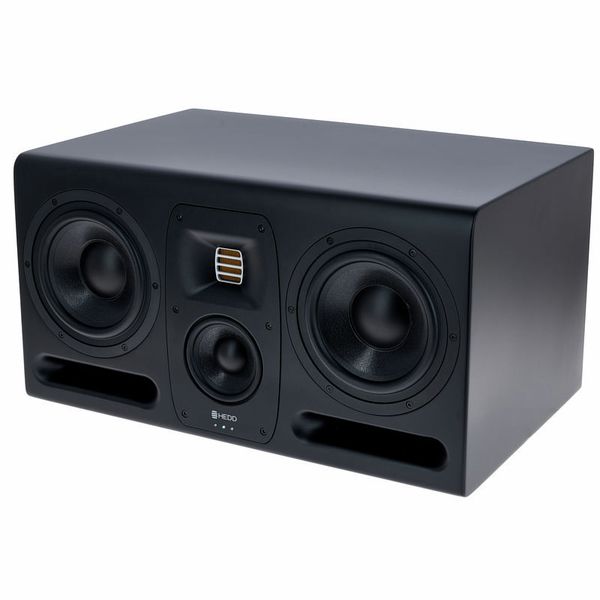
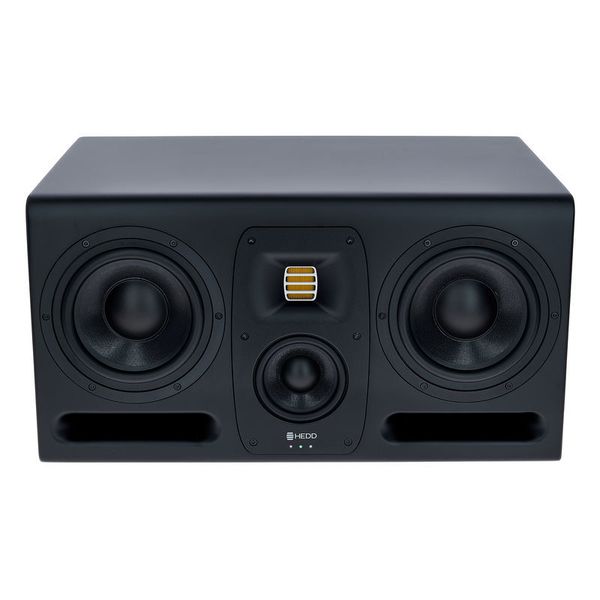
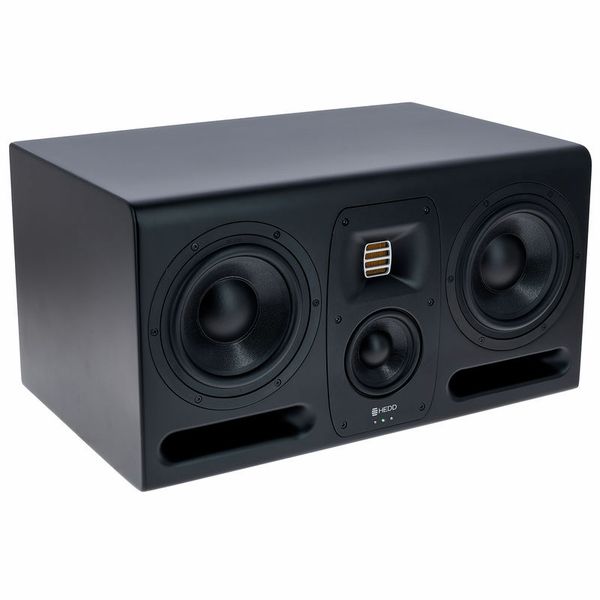
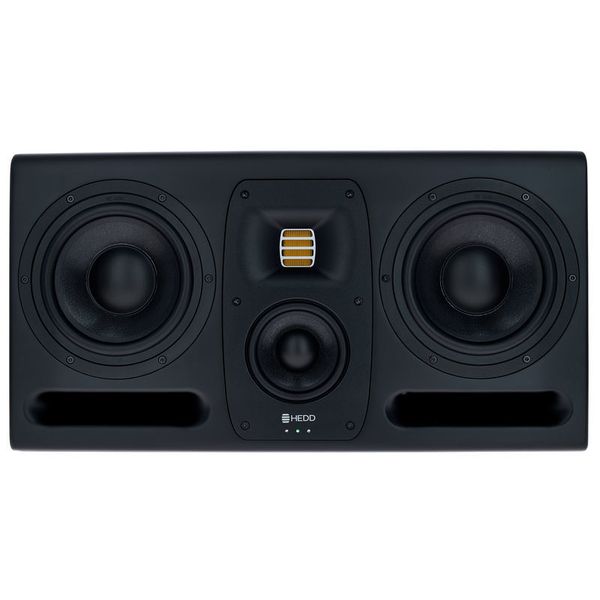
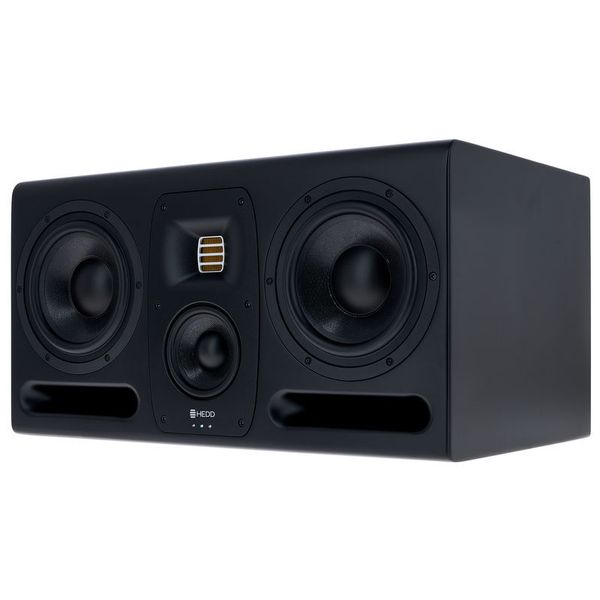
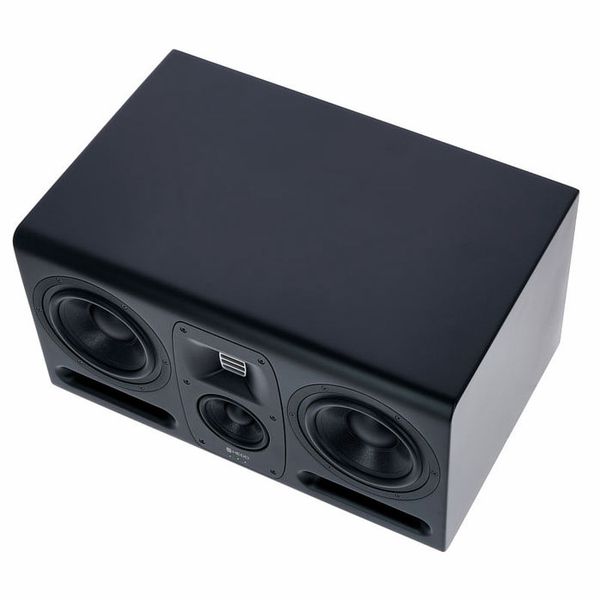


Actieve 3-way studiomonitor
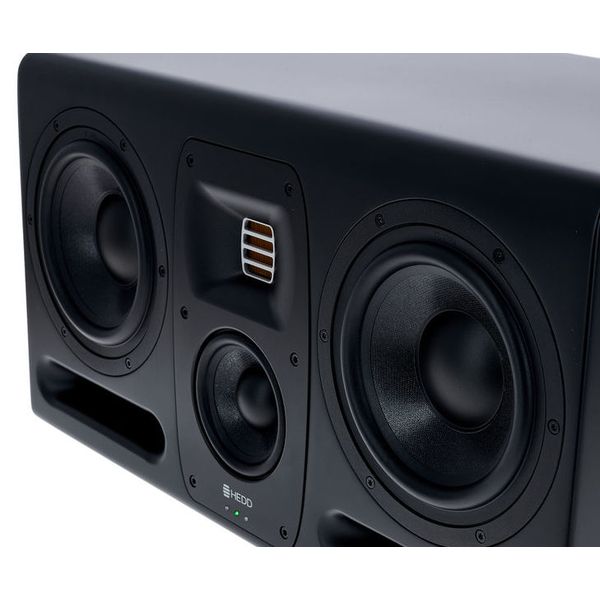
- 2x 7" low-midrange speaker (300 W)
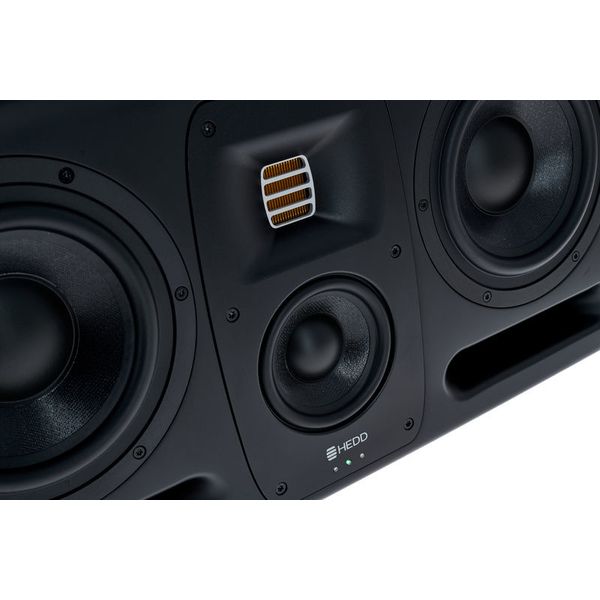
- 4" Midrange speaker (300 W)
- 2" AMT tweeter (300 W)
- DSP-systeem met geïntegreerde Lineariser-technologie
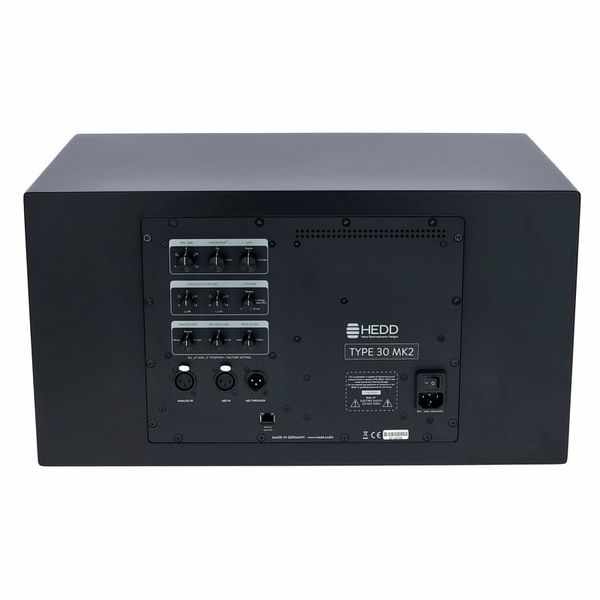
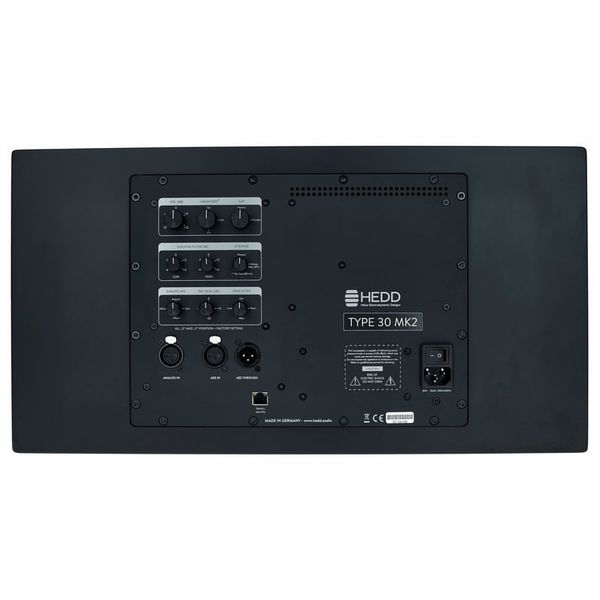
- Analoge ingang: XLR symmetrisch
- Digitale ingang: AES IN
- Digitale uitgang: AES Through
- Resolutie: 32 bit / 96 kHz
- Ingangssignaalsterkte: ± 12dB
- Shelf-filter Low/High: ± 4dB
- Desk Filter
- Frequentiebereik: 32 - 40000 Hz
- Max. niveau: 125 dB
- Afmetingen (H x B x D): 280 x 530 x 338 mm
- Gewicht: 21,5 kg
-
Leverbaar sinds Januari 2021
-
artikelnummer 508496
-
verkoopseenheid 1 stuk
-
Woofer Size Class 7"
-
Number of Ways 3
-
Construction Typ - Bass System Bass Reflex
-
Coaxial System No
-
Power per Piece 900 W
-
Frequency Range 32 Hz – 40000 Hz
-
Analog XLR Input Yes
-
Analog TRS Input No
-
Analog Mini TRS Input No
-
Digital Input Yes
-
Manual EQ Yes
-
DSP Room Correction none
-
Magnetic Shielding Yes
-
Weight 21,5 kg
-
Woofer 2x 7"
-
Midrange Speaker 4"
-
Tweeter 2“
-
Height 280 mm
-
Width 530 mm
-
Depth 338 mm
-
Flagship monitor made in Berlin
The HEDD Type 30 MK2 is the flagship studio monitor from the Berlin-based manufacturer. Its full 3-way design features dedicated amplification for each driver: dual 7" honeycomb woofers, a 4" midrange driver, and HEDD's 2” Air Motion Transformer (AMT) tweeter, whose folded-membrane design delivers ultra-fast transient response and detailed high-frequency reproduction. Bass reflex ports extend the monitor's low-frequency performance, while removable plugs allow the cabinet to be sealed for tighter low-end control. The monitor's frequency response extends from approximately 32Hz up to 40kHz. The MK2 generation adds an internal DSP platform, including HEDD's Lineariser technology, which improves phase accuracy with ultra-short signal delays and enhances stereo imaging and transient precision. This feature can also be synchronised with subwoofers from the HEDD Bass series for optimised system integration.
)
Integrated DSP and connectivity
The Type 30 MK2 incorporates a high-resolution DSP platform with AD/DA converters operating at 96kHz and 32-bit resolution. In addition to the balanced analogue XLR input, the Type 30 MK2 also features an AES/EBU input/output for daisy-chaining multiple speakers in digital format. When used as a stereo pair, the system is capable of reaching a maximum sound pressure level of 125dB SPL. A range of DSP tools helps adapt the monitor to different studio environments, including input-level adjustment of ±12dB, high- and low-shelving filters adjustable by ±4dB, and a dedicated desk filter to compensate for reflections from mixing consoles or nearby surfaces. A bass-extension mode can increase low-frequency output by up to 20%, giving engineers additional flexibility when working in different rooms or monitoring configurations.
)
For demanding studio environments
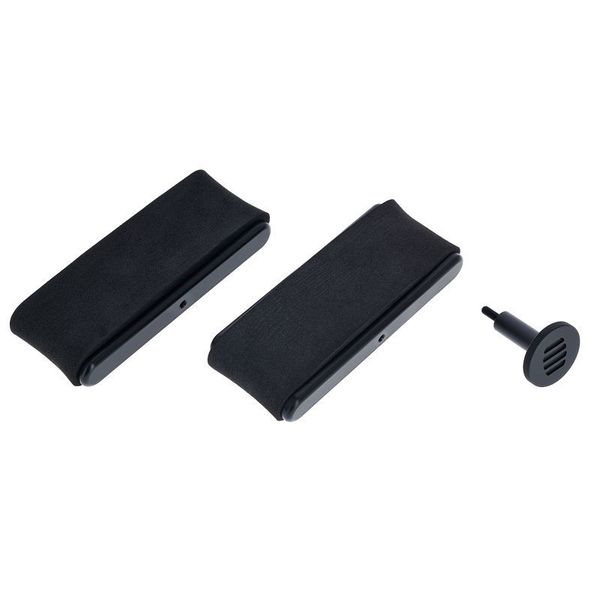
Measuring 53cm in height and weighing 21.5kg, the HEDD Type 30 MK2 is a physically imposing monitor that requires sufficient space to express its full potential. Its powerful three-way architecture provides ample headroom and dynamic range, specifically as a midfield monitor system for medium to large recording and mastering studios, where detailed and nuanced reproduction is essential for critical listening tasks. The robust cabinet construction, with thick panels and extensive internal bracing, ensures stable acoustic performance even at high monitoring levels. Another distinctive feature is HEDD's CoP (Closed or Ported) technology: Using the supplied port plugs and corresponding DSP settings, the monitor can operate either as a bass reflex system for greater low-frequency output or as a sealed cabinet for improved transient response and bass precision.
)
About HEDD
The family-owned company HEDD Audio was founded in 2015 in Berlin, where it still manufactures its high-quality studio monitors, subwoofers, and hi-fi speakers, as well as headphones – or HEDDphones. The name HEDD stands for Heinz ElectroDynamic Design, after its founder Klaus Heinz (who also founded ADAM Audio); his son, who himself has a PhD in musicology, is now CEO. The company’s R&D work is based on their decades of experience, and its mission is to deliver outstandingly detailed sound and optimum signal quality. A whole host of renowned DJs and mastering engineers, including DJ Jazzy Jeff and Sascha "Busy" Bühren, swear by HEDD products for their day-to-day work.
Monitoring configurations
In medium-sized acoustically treated control rooms, the HEDD Type 30 MK2 really comes into its own – here, users can take full advantage of its dynamic headroom and three-way architecture. But even in less-than-ideal rooms, the DSP tools allow engineers to fine-tune the monitor's response to compensate for acoustic limitations, ensuring reliable monitoring conditions. In multi-monitor setups (for example in a 2.1 configuration with a subwoofer from the HEDD Bass series) the Type 30 MK2's Lineariser and DSP processing help maintain accurate phase alignment and system coherence across the entire frequency range. Together with the Closed or Ported functionality, these tools allow the Type 30 MK2 to be adapted precisely to different setups and tasks, from recording and mixing to detailed production and mastering work.
Accessoires & verwante producten





Vergelijk opties
-
HEDD midfield monitors in een oogopslag
-
midfield monitors in de prijscategorie van 2250 € - 2750 € weergeven
-
naar productgroep midfield monitors
-
naar productgroep afluistermonitors
-
naar productgroep Studio- en recording-apparatuur
-
toon fabrikant details voor HEDD
-
HEDD Studio- en recording-apparatuur in een oogopslag