


Avid Pro Tools Carbon

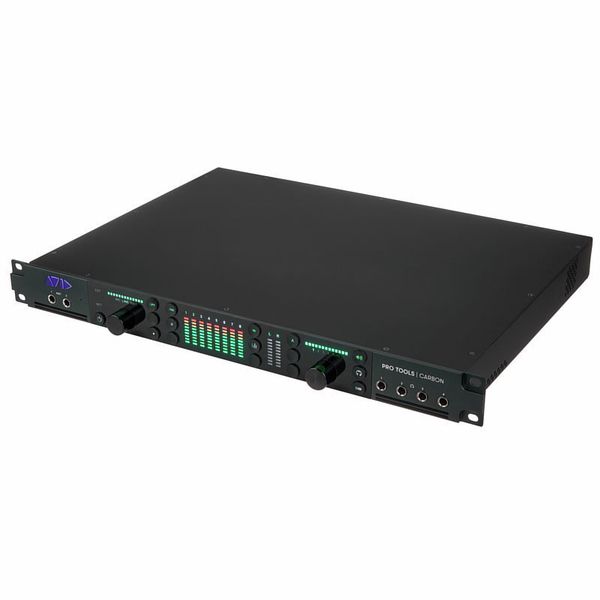
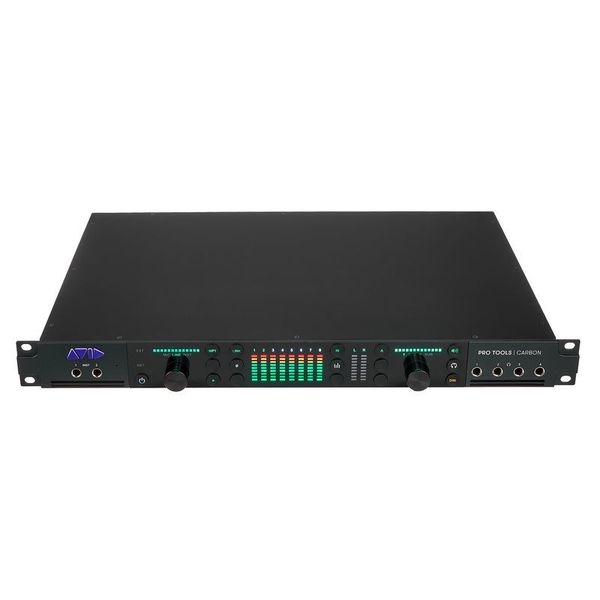
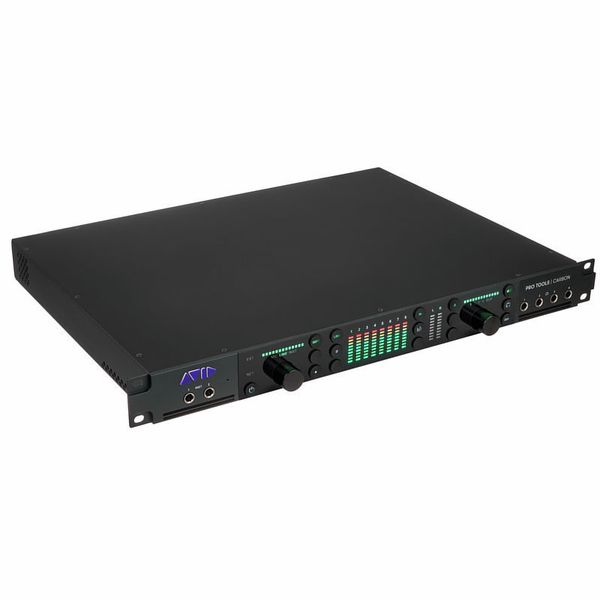
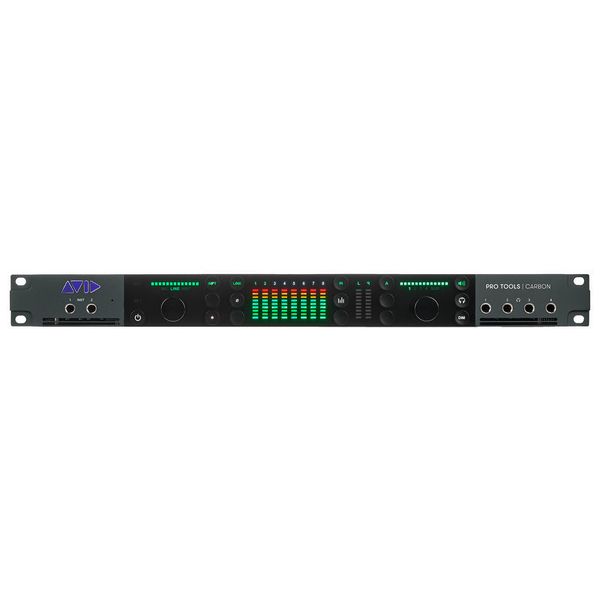


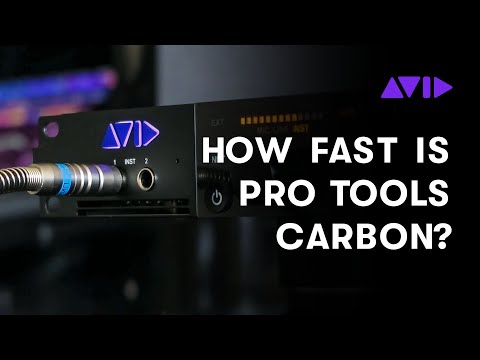
DSP audio-interface voor Pro Tools
- 25 x 34 DSP audio-interface
- Perfect afgestemd op Avids Pro Tools Ultimate software
- Per kanaal toewijsbare DSP-modus voor low-latency monitoring voor HDX-compatibele plugins maakt vrijwel latentievrije effecten in opnamesituaties of ter ontlasting van de computer-CPU mogelijk
- Ondersteuning van Stereo en meerkanaals monitoring in 5.1 plus Stereo, 7.1 plus Stereo en 5.1.4 en 7.1.2 voor Dolby Atmos
- Uitbreidbaar met maximaal twee Carbon Pre (art. 553853) voor configuraties met max. 24 in- en uitgangen in doorlopende 32 bit / 192 kHz resolutie
- 8 HDX DSP-processors (2,8 GHz)
- Audioresolutie 32 bit/192 kHz
- Afmetingen: 19“ / 1 U
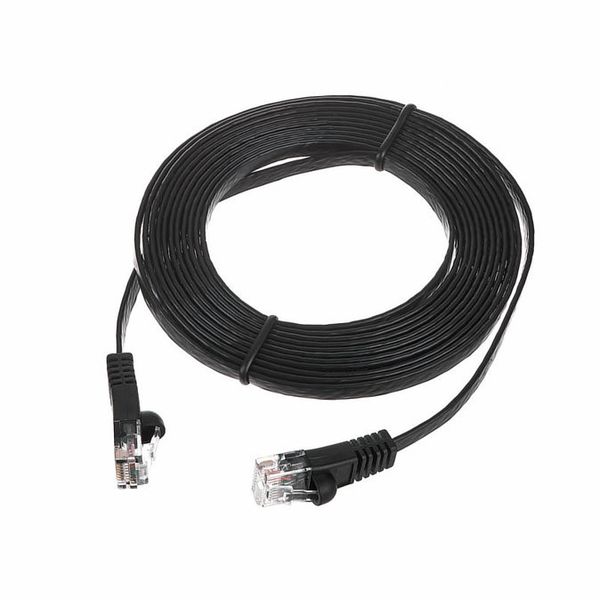
- Bij de levering inbegrepen: stroomkabel, Ethernet-kabel, rackschroeven, rubberen voeten
- Incl. permanente licentie voor Pro Tools Ultimate software met 12 maanden Upgrade en Support Plan en uitgebreid softwarepakket (download)
- Systeemvereiste: Pro Tools 2020.11, MacOS Catalina 10.15.6 of later, Ethernet-aansluiting of adapter van Thunderbolt naar Ethernet
Ingangen:
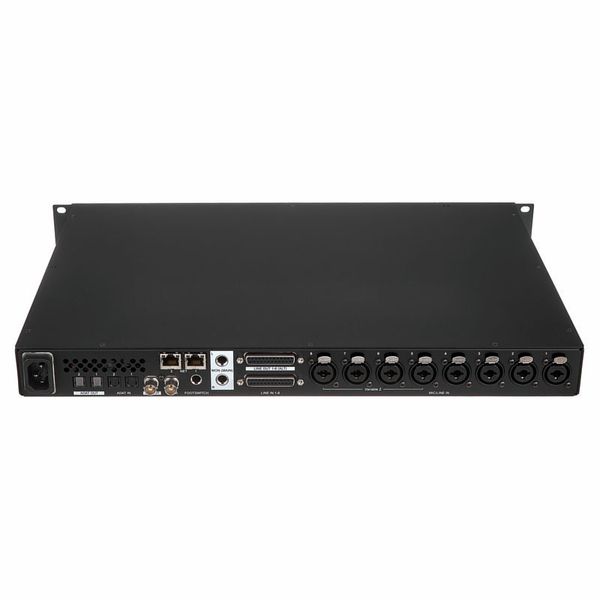
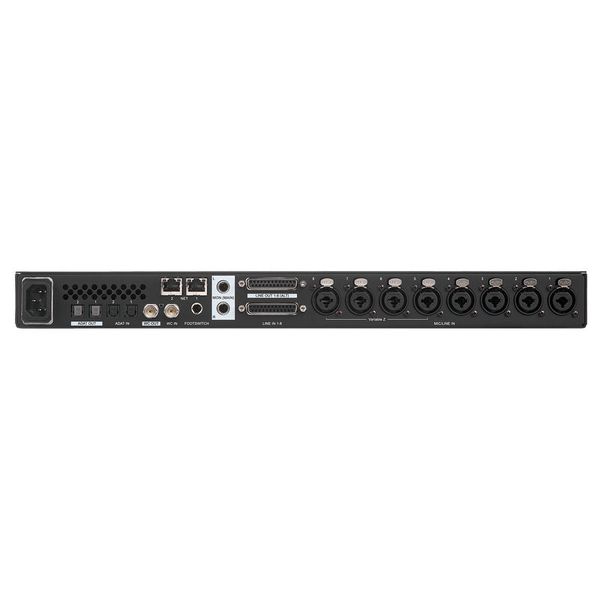
- 8 Combo-ingangen (XLR/Jack symmetrisch) met Variable Z (ingang 5-8)
- 8 Line inputs (25-pin D-sub symmetrisch)
- 2 Variabele Z-instrumentingangen aan de voorkant (6,3 mm Jack ongebalanceerd)
Uitgangen:
- 8 Line outputs (25-pin D-sub symmetrisch)
- 2 Monitoruitgangen (6,3 mm Jack symmetrisch), dynamisch bereik: 120 dB (A-gewogen), THD+N: -110 dB (0.0003%), frequentiebereik: 20 – 20.000 Hz, ±0.1 dB
- 4 Koptelefoonuitgangen aan de voorkant (6,3 mm Jack), vermogen: 200 mW bij 32 ohm
- ADAT I/O: 16 kanalen @ 44.1 – 48 kHz, 8 kanalen @ 88,2 – 96 kHz, 4 kanalen @ 176.4 – 192 kHz
- Word Clock in- en uitgang
-
Leverbaar sinds December 2020
-
artikelnummer 506683
-
verkoopseenheid 1 stuk
-
Thunderbolt No
-
USB 3 No
-
Ethernet Yes
-
Audio In-and Outputs Yes
-
System Expansion No
Pro Tools interface with 1ms latency
The Avid Pro Tools Carbon is a 1U audio interface built exclusively around Pro Tools on macOS, combining a conventional audio interface with eight HDX DSP processors in a hybrid engine that eliminates latency as a creative constraint. The core proposition is straightforward: Record-arming a track automatically shifts its entire signal path – including all downstream aux and bus channels – to the onboard DSP, reducing round-trip latency to under 1ms regardless of session complexity or buffer size. AAX DSP plug-ins replace their native counterparts automatically when DSP Mode activates, retaining all settings, and switch back when the track is taken out of record. The result is a system that behaves like a standard Pro Tools rig until latency matters – at which point it eliminates it without requiring the engineer to reconfigure anything.
)
The hybrid engine in practice
DSP Mode cascades automatically: record-arming a guitar track switches not just that channel but every downstream group, bus, and aux into DSP Mode simultaneously. AAX DSP versions of instantiated plug-ins replace their native counterparts in the process – plug-ins without a DSP equivalent are muted rather than bypassed, preserving the signal path. When the track is taken out of record, everything switches back to native automatically, with all plug-in settings intact. The eight HDX DSP processors run at 2.8GHz aggregated – less raw power than a full HDX rig, but used differently: DSP load is dynamic rather than cumulative, allocated only to record-armed tracks rather than running the entire mixer. One honest limitation: AAX DSP instrument plug-ins do not currently exist, so virtual instruments must run natively and are subject to standard buffer latency.
)
Converters, preamps, and connectivity
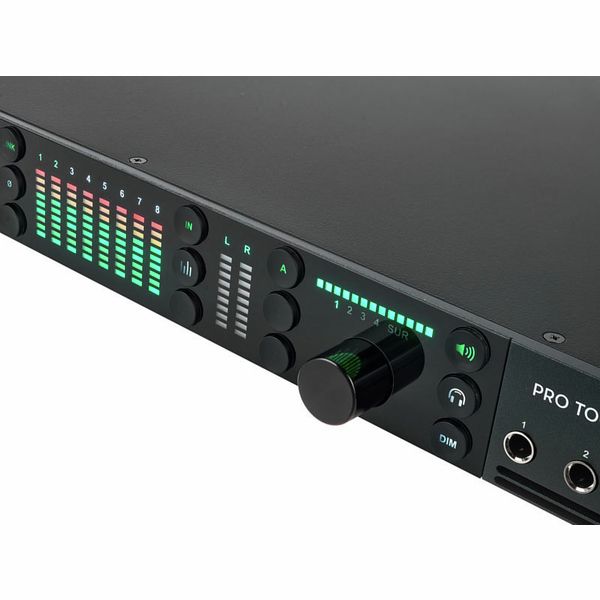
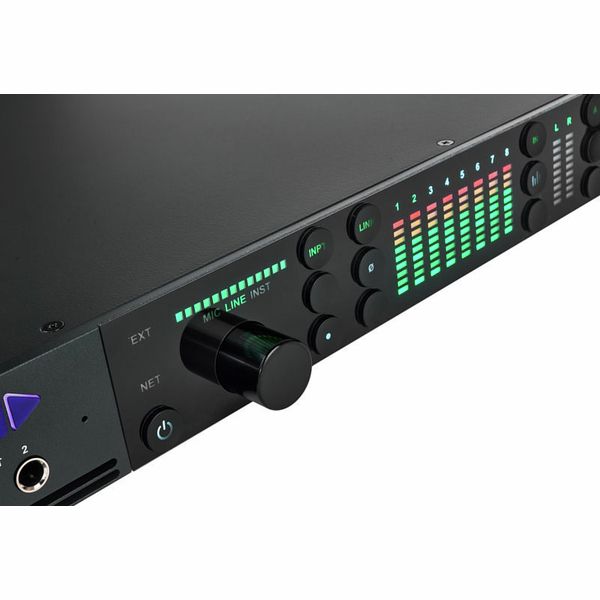
The eight mic preamps deliver 126dB dynamic range (A-weighted), THD+N of -105dB (0.00056%), and an EIN of -129dBu – among the cleanest preamp figures at this price point. Conversion runs at up to 32-bit/192kHz, underpinned by a double-resolution JetPLL clock implementation running at 100MHz – twice the speed and accuracy of standard JetPLL clocks. Inputs 5-8 carry variable impedance switching, remotely controllable from Pro Tools; two front-panel instrument inputs offer five impedance settings down to 32 kOhms. A DB25 connector provides eight alternate balanced line inputs, bypassing the preamps for outboard integration. Four independently addressable front-panel headphone outputs deliver 200mW into 32 ohms; a built-in talkback microphone and A/B/C speaker switching with independent level control complete the monitoring section. ADAT expansion adds up to 16 channels at 44.1/48kHz, halving at higher sample rates, with Word Clock I/O for clock distribution.
)
About Avid
Avid is one of the world’s leading manufacturers of audio and video software as well as the related hardware. The first core product from the company, which was founded in the USA in 1987, was the Avid Media Composer, which, as software for non-linear video editing, was the first to digitalise film material and remains one of the industry standards to this day. Since the takeover of Digidesign in 1995, the DAW software Pro Tools, which is in wide use particularly in the USA, has also been part of the portfolio of the steadily growing group. As time went on, Avid took also over the further development of the products made by M-Audio, Pinnacle Systems, and Sibelius Software, among others.
Software, licensing, and integration
The Carbon ships with a Pro Tools Ultimate perpetual licence and a one-year Software Updates and Support Plan – after the first year, the perpetual licence remains active but future updates require renewal. The included plugin bundle covers over 120 AAX plugins bundled with Pro Tools, plus premium third-party additions from McDSP, Brainworx, Arturia, UVI, and Native Instruments in both AAX Native and AAX DSP formats. Carbon connects via Ethernet using Avid's proprietary AVB-based protocol – requiring either the built-in Ethernet port on a Mac or a qualified Thunderbolt-to-Ethernet adapter. The system is macOS-only; Windows support has not been announced. For studios whose workflow centres on Pro Tools and who need latency-free tracking through a full plug-in chain, the Carbon is the only interface that delivers it without compromise – the Carbon Pre expander adds up to 24 mic/line inputs and 24 line outputs via a second AVB port, extending the system to full band tracking without additional interfaces.