


Yamaha PSR-E383

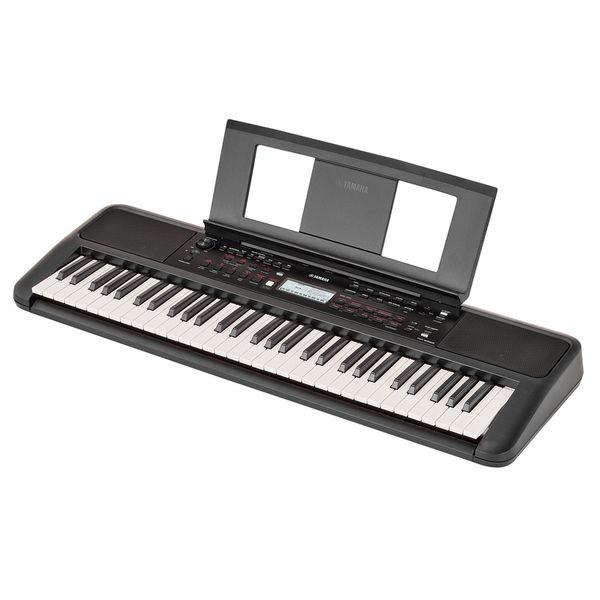
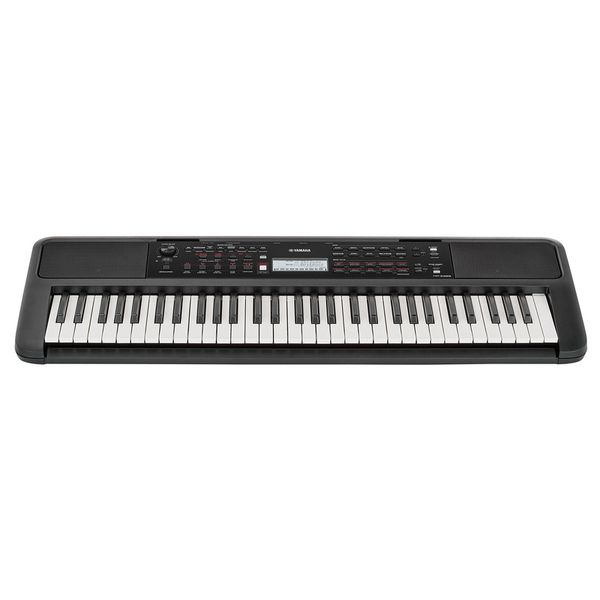
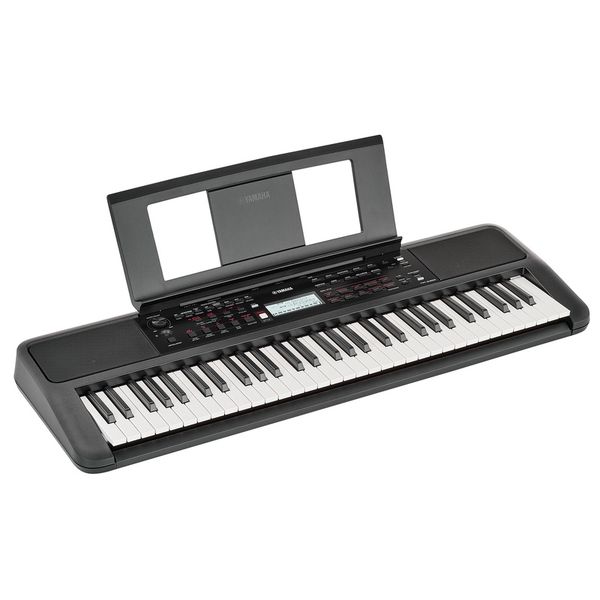
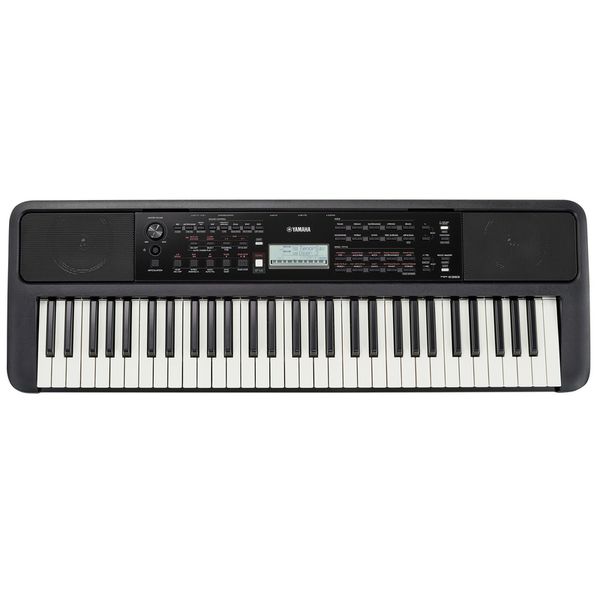
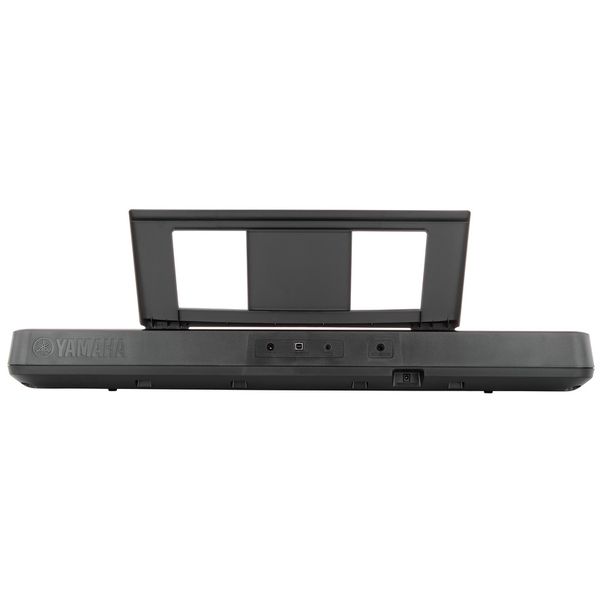
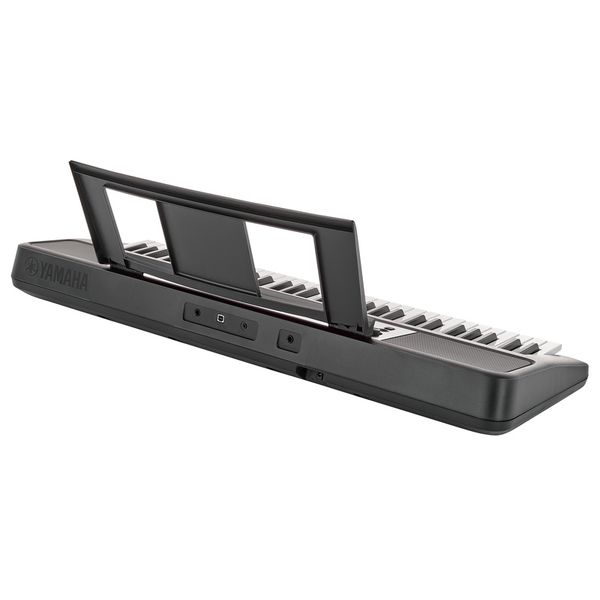
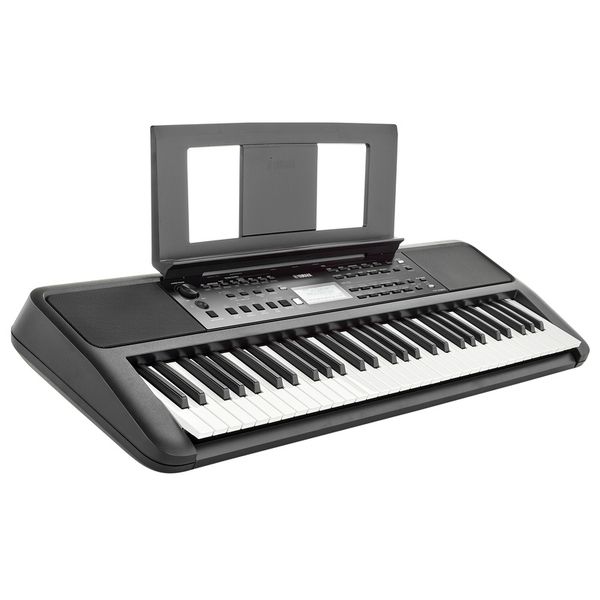
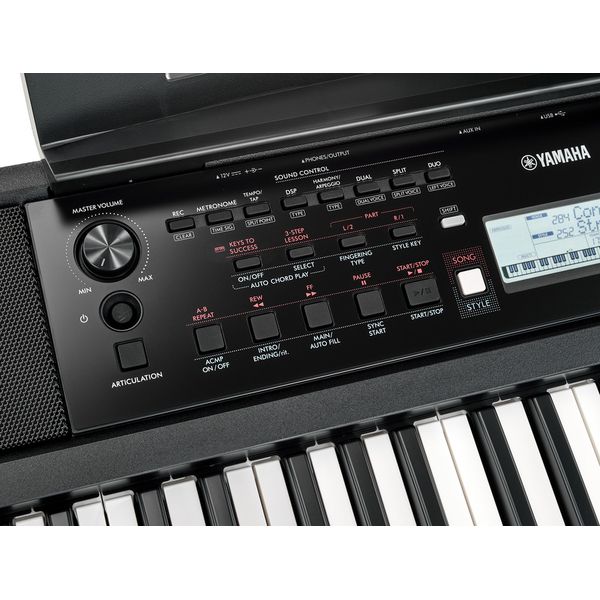
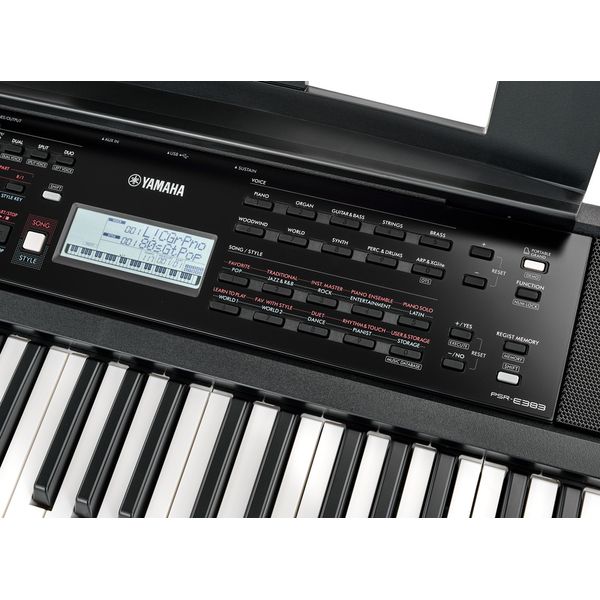
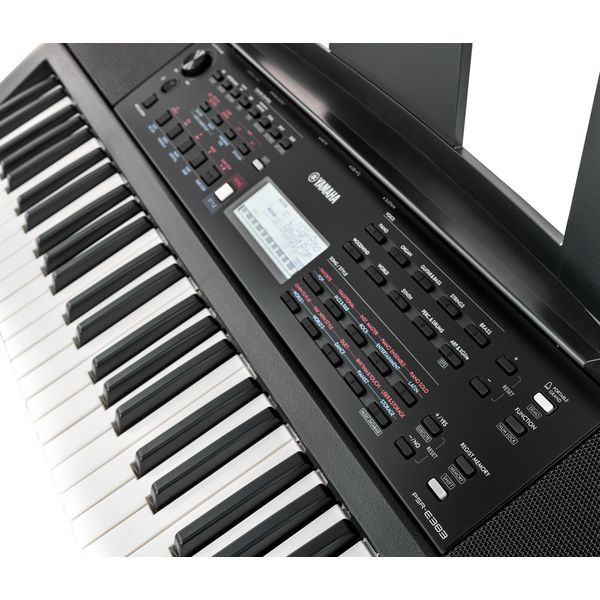


Keyboard
- Opvolger van de PSR-E373
- 61 Toetsen met aanslaggevoeligheid
- 650 Sounds incl. 25 Drum/SFX kits
- Dual
- Split
- 260 Styles, 10 user styles (SFF-formaat)
- One touch settings
- 50 Chord progressions
- Music Database met 200 items
- 10 Registration Memories
- 125 Songs
- 48-Stemmige polyfonie
- LCD display met achtergrondverlichting
- Midi-recording: 5 songs met 2 tracks elk in eigen bestandsformaat
- MIDI-player: SMF 0 & 1
- Effecten: DSP (41), Reverb (15), Chorus (7), Master EQ (5), Harmony (26), Melody Suppressor
- Metronoom
- Leerfunctie
- Luidsprekersysteem: 2x 2,5 W
- Kan op batterijen worden gebruikt (6x AA LR6/R6/HR6 vereist, niet inbegrepen bij de levering)
- Afmetingen (B x D x H): 941 x 317 x 105 mm
- Gewicht: 4,4 kg
- Kleur: Zwart
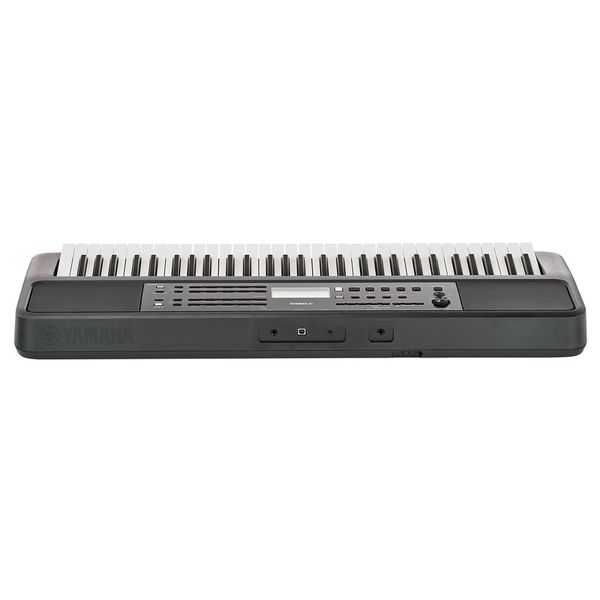
Aansluitingen:
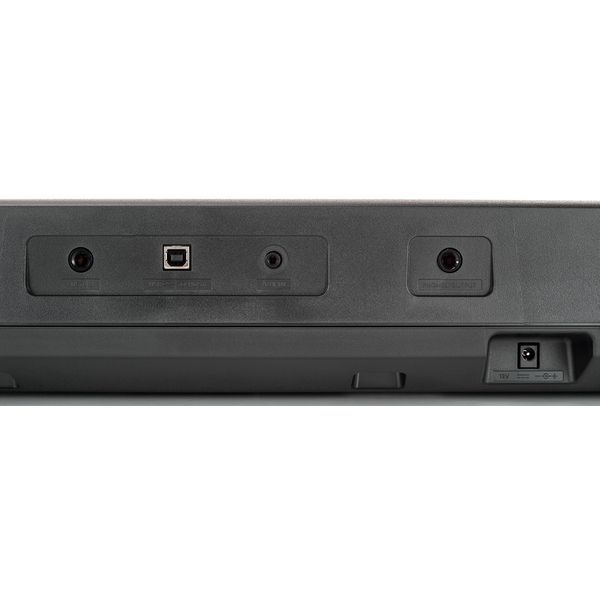
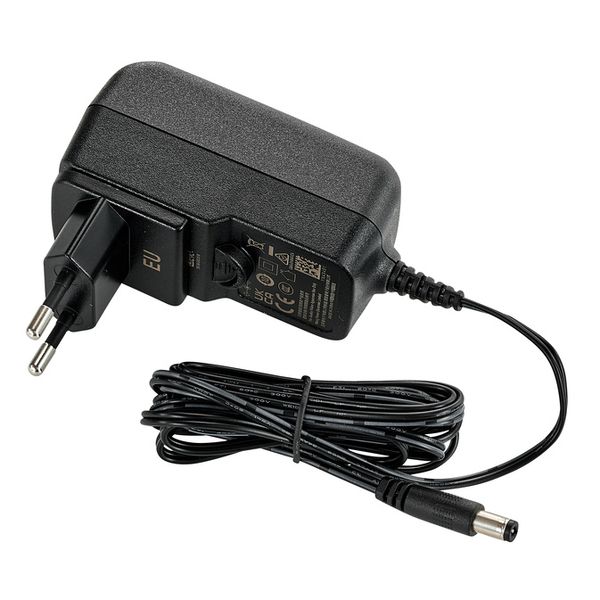
- Netvoeding
- Koptelefoonuitgang/Line Out: 6,3 mm stereo-Jack
- Sustain-pedaal (niet bij de levering inbegrepen)
- Aux-In: 3,5 mm stereo mini-Jack
- USB to host (Midi & Audio)
Bij de levering inbegrepen:
- PSR-E383
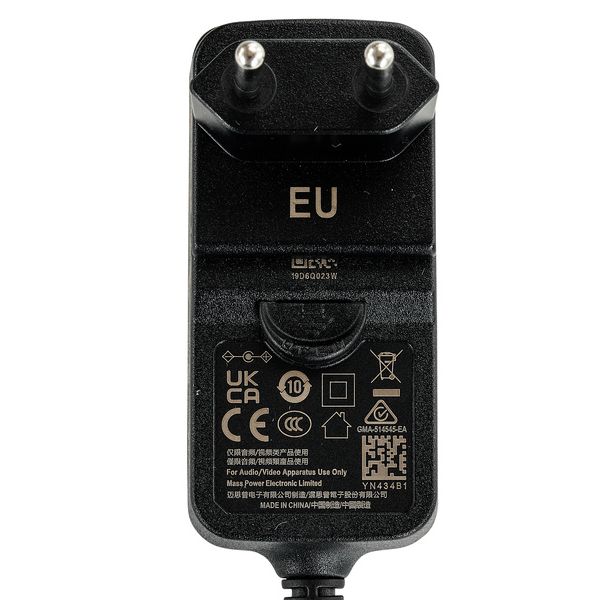
- Netvoeding (PA-130)
- Bladmuziekhouder
- Productregistratiekaart
- Songboek (beschikbaar als digitale download op de Yamaha-website)
-
Leverbaar sinds April 2024
-
artikelnummer 589542
-
verkoopseenheid 1 stuk
-
Keys 61
-
Illuminated Push-Button No
-
Touch-Sensitve Yes
-
Aftertouch No
-
Storage Medium Computer, internal
-
Lyrics Function No
-
Score Function No
-
Vocal Harmony No
-
USB Audiorecorder No
-
MIDI interface 1x USB
-
Microphone input No
-
USB Yes
-
Polyphony 48
-
Speaker 2x 2,5 W
-
Dimensions in mm 941 x 317 x 105
-
Weight in kg 4,4 kg
-


The keyboard that learns with the player
Many beginners have taken their first steps with keyboards from Yamaha's PSR series. The PSR-E383's extensive selection of sounds and styles, which has been increased yet again since the predecessor model, offers something for every taste, from piano for traditional exercises to instrumental and synthesizer sounds for Pop, Jazz, Latin, and much more. With the tried-and-tested three-step system and Yamaha's extensive "Keys to Success" lessons, learning is easy – and budding musicians will find their playing skills improving quicker than expected. To aid further progress, there are numerous accompaniment styles, onboard songs to play along to, and a new Auto Chord Play function. The Yamaha PSR-E383 has everything close to hand, allowing players to practise on their own, or play to friends and family whenever they are ready.

)
Sounds and accompaniments
The Yamaha PSR-E383 has a 61-key velocity-sensitive keyboard, with a velocity curve that can be adjusted to suit each individual's playing experience. The polyphonic sound generation offers 48 simultaneously available voices, and a total of 650 sounds are included in the package (panel voices, drum kits, arpeggio, XGlite), the most notable of which are perhaps Yamaha's "Super Articulation Lite Voices", which thanks to their myriad variations are particularly suitable for solos. The sounds can be customised with DSP effects and a master EQ. The 260 automatic accompaniments and 125 onboard songs cater for many of the most popular music styles, and there are even 152 arpeggios that are particularly typical for modern dance music. For further practice, Yamaha includes a download of the "Easy Song Book". The Yamaha PSR-E383 has two integrated speakers and a headphone socket, and it can be connected to a computer via the USB port for a MIDI/audio connection.
)
Getting started is rarely this easy
Yamaha has taken its decades of experience in creating instruments for learners and teachers and applied it to creating the PSR series of keyboards. Because of their deliberately simple user interface, beginners of all ages can take their first steps in learning the keyboard without any reservations or reluctance. Students lucky enough to be receiving individual lessons can also use the Duo mode to play with their teacher four-handed. Even once a student has made considerable progress, the Yamaha PSR-E383 will prove a reliable and motivational partner thanks to its great range of styles and accompanying functions – after all, making music with it is nothing short of fun. For more experienced musicians looking to expand their repertoire of piano pieces in particular, however, we recommend the Yamaha PSR-EW320, as it has a larger octave range.
)
About Yamaha
For decades, Yamaha has been one of the world's best-known manufacturers of musical instruments and audio technology. The Japanese company's long history began at the end of the 19th century with the harmonium. The product range has constantly expanded since then, which has made Yamaha one of the few manufacturers today to offer almost the entire range of existing musical instruments: From upright and grand pianos to guitars, wind instruments, and bowed string instruments and from drums and percussion to electronic keyboards and synthesizers. Yamaha is also a major force in the field of audio engineering as a manufacturer of mixing consoles, amplifiers, PA systems, and more. Yamaha's guiding principle is to combine traditional craftsmanship with state-of-the-art technology.
Learning step by step
The standard learning function of the Yamaha PSR-E383 can be broken down into three steps. First, the piece being practised is played by the keyboard itself, with the notes (and the corresponding keys) shown on the display. The next step focuses on timing, in order to develop a student's sense of the rhythm of a melody. The third stage is where playing the right notes in the right order starts to become relevant: The notes will only play if the keys are played in the correct order. Building on this process, the "Keys to Success" lessons allow players to begin learning entire songs, which are split up into distinct passages to allow step by step practice. The notes for the left and right hands are, at first, learned separately, and then practised together, which is ideal for beginners in particular. Each performance of a section is given a score, so players can decide whether they want to keep practising or move on to the next section. In further exercises, there is greater focus on playing dynamically.