




Helaas is er een fout opgetreden, probeert u het a.u.b. later nogmaals.
D
Roto-Control: Smart Design, Flawed Execution
The Melbourne Instruments Roto-Control offers an innovative take on MIDI control in live, DAWless setups. With its motorized encoders and dynamic mapping capabilities, it introduces a fluid workflow for performers looking to adjust parameters on the fly. In that context, it excels—fast to integrate, visually intuitive, and adaptable mid-performance. It distinguishes itself from devices like the Electra One MkII by prioritizing immediacy and improvisational control over deep configuration or studio-grade recall.
However, there are areas that need refinement. My first unit exhibited erratic behavior from the electronic potentiometers, falsely registering input and rendering the MIDI learn function unusable. This was ultimately resolved with a replacement, and to be fair, most other reports don't mention this issue. Hopefully it was just bad luck on my part, but it's worth noting in case others encounter similar behavior. In any case, customer support was excellent—quick, helpful, and professional throughout the process.
The lack of a community-driven preset or patch library is another clear shortcoming. For a device centered around flexibility and rapid mapping, the absence of shared configurations limits its out-of-the-box usefulness. This feels like low-hanging fruit for Melbourne Instruments to address in future updates.
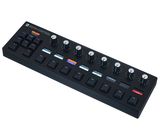
Physically, the unit is functional but unremarkable. The controls are solid, and the layout suits compact rigs, but the plastic housing is a letdown. For gear intended to be central to live performance, metal construction would offer the durability needed for long-term use. As it stands, the Roto-Control feels more fragile than it should.
Despite these issues, the Roto-Control's core concept is strong. With an improved preset ecosystem and a sturdier chassis, it could evolve into a staple tool for performance-focused MIDI control.
(Please ignore the sound rating, I was forced to give one)
However, there are areas that need refinement. My first unit exhibited erratic behavior from the electronic potentiometers, falsely registering input and rendering the MIDI learn function unusable. This was ultimately resolved with a replacement, and to be fair, most other reports don't mention this issue. Hopefully it was just bad luck on my part, but it's worth noting in case others encounter similar behavior. In any case, customer support was excellent—quick, helpful, and professional throughout the process.
The lack of a community-driven preset or patch library is another clear shortcoming. For a device centered around flexibility and rapid mapping, the absence of shared configurations limits its out-of-the-box usefulness. This feels like low-hanging fruit for Melbourne Instruments to address in future updates.
Physically, the unit is functional but unremarkable. The controls are solid, and the layout suits compact rigs, but the plastic housing is a letdown. For gear intended to be central to live performance, metal construction would offer the durability needed for long-term use. As it stands, the Roto-Control feels more fragile than it should.
Despite these issues, the Roto-Control's core concept is strong. With an improved preset ecosystem and a sturdier chassis, it could evolve into a staple tool for performance-focused MIDI control.
(Please ignore the sound rating, I was forced to give one)
12
2
Evaluatie melden
Helaas is er een fout opgetreden, probeert u het a.u.b. later nogmaals.
P
Premium Price, Disappointing Quality Control
I really like the concept of this controller and think it has a lot of potential, but my experience hasn’t been great so far. My first unit had one knob with unusual resistance, which I later saw mentioned in another review as well. I exchanged it, but the second unit also arrived with one faulty knob. This one had an incorrect internal insert that caused friction and noise.
Another drawback is the lack of an on/off switch. There’s no easy way to power down the unit when it’s not in use; you have to unplug it every time, which isn’t ideal in a studio setup.
Considering the premium price, I expected better quality control and more attention to basic usability details. The idea behind the product is excellent, but the reliability issues make it hard to recommend at this price point. I hope future revisions improve consistency, because the concept is genuinely promising.
Another drawback is the lack of an on/off switch. There’s no easy way to power down the unit when it’s not in use; you have to unplug it every time, which isn’t ideal in a studio setup.
Considering the premium price, I expected better quality control and more attention to basic usability details. The idea behind the product is excellent, but the reliability issues make it hard to recommend at this price point. I hope future revisions improve consistency, because the concept is genuinely promising.
6
2
Evaluatie melden