


Audient ASP800

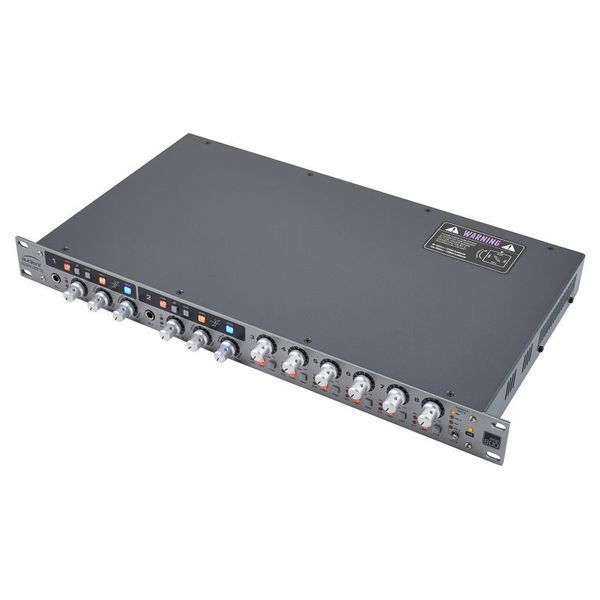
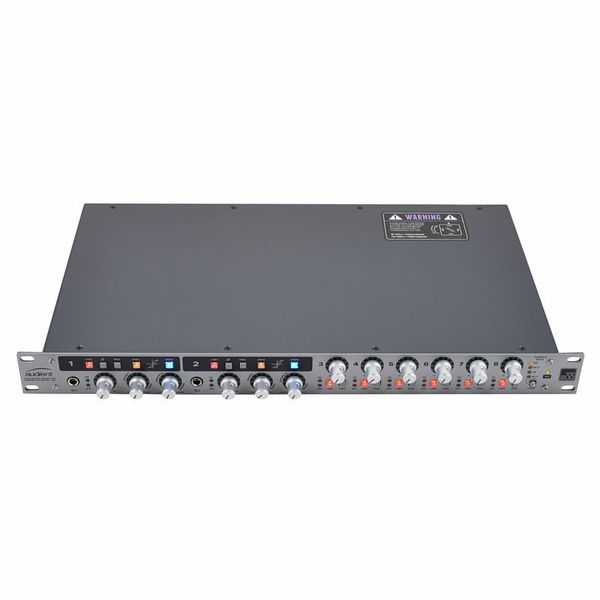
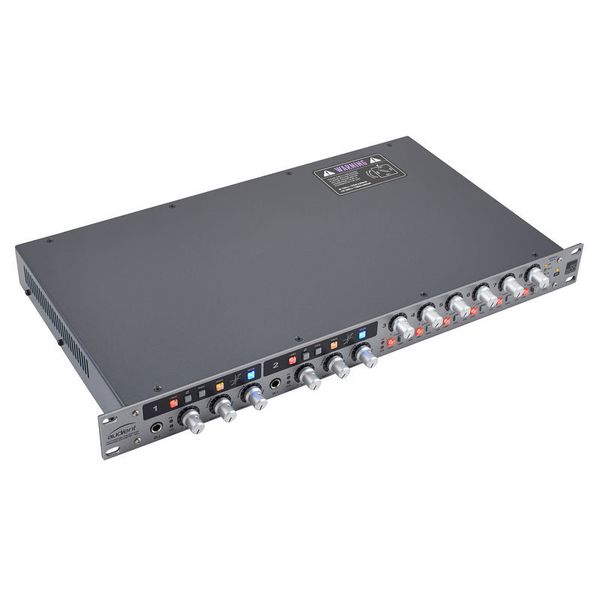
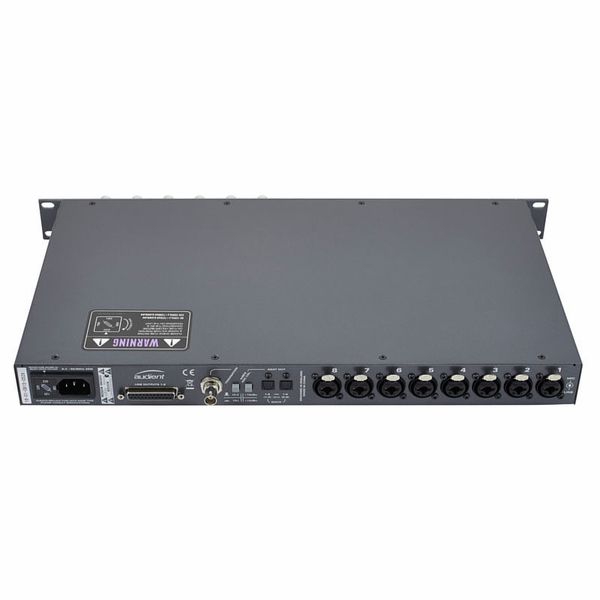
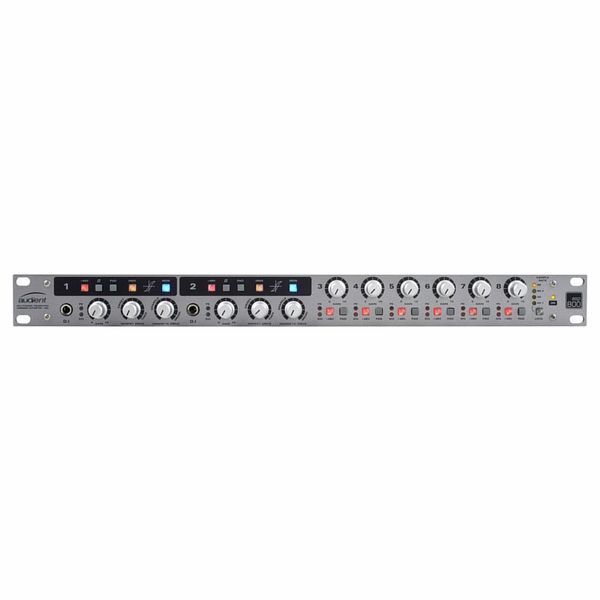
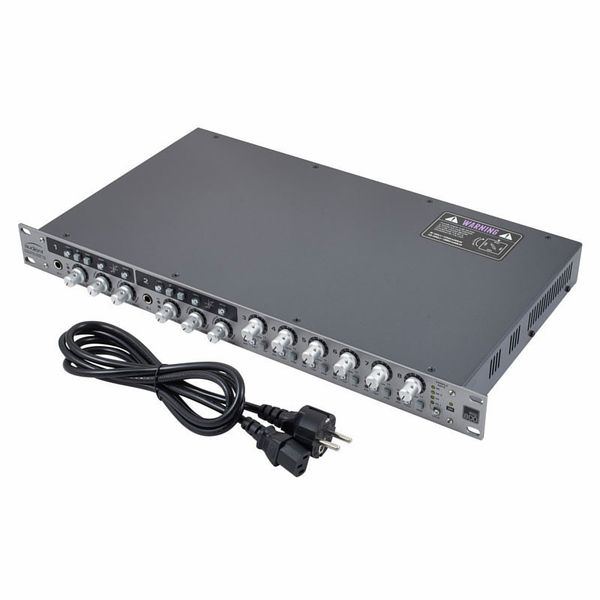


Class-A microfoon voorversterker en A / D converter met acht kanalen
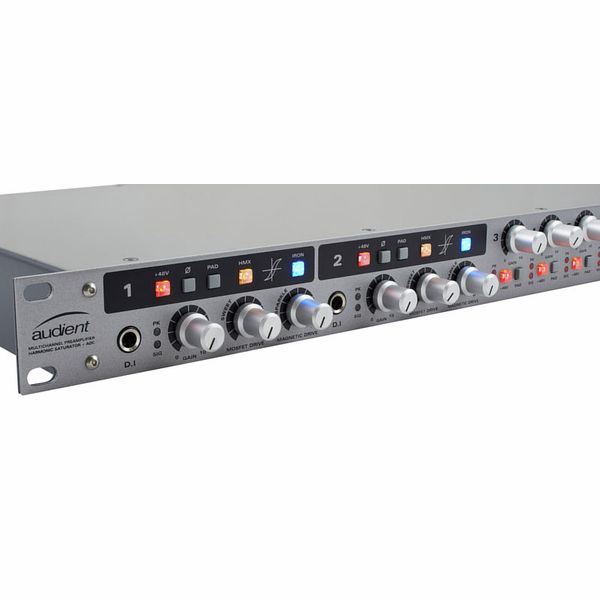
- Twee "Retro Channels" met Dual Stage Saturation - HMX & IRON
- Twee JFET DI ingangen
- Kwaliteit 118dB Burr Brown A / D-converter
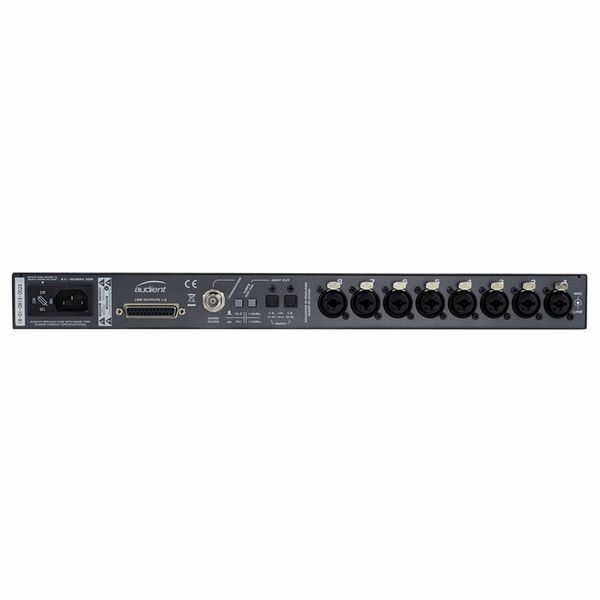
- XLR / TRS combo jacks
- Microfoon Gain 0 - 70 dB
- -15dB Pad per kanaal
- Sample rate: 44,1 tot 96 kHz
- 48V fantoomvoeding voor alle ingangen
- Wordclock ingang
- ADAT Out met SMUX
- Analoge uitgangen via DB25
- Aluminium knoppen
- Ventilatorloze, ingebouwde universele voeding (90-264 volt)
- 19" formaat, 1 rack unit
- Robuuste metalen behuizing
- Afmetingen (B x D x H): 483 x 286,5 x 44 mm
- Gewicht: 4,5 kg
-
Leverbaar sinds Oktober 2015
-
artikelnummer 362463
-
verkoopseenheid 1 stuk
-
Channels 8
-
Number of microphone inputs 8
-
Instrument input Yes
-
Tubes No
-
Compressor/Limiter No
-
Equalizer Yes
-
De-Esser No
-
Phantom power Yes
-
Phase Reverse Yes
-
External effect loops No
-
Analogue Outputs Sub-D 25-pol
-
Digitale Outputs ADAT
-
Headphone connection No
-
Level Meter Yes
-
Design 19" / 1U
Eight-channel preamp and A/D converter in one
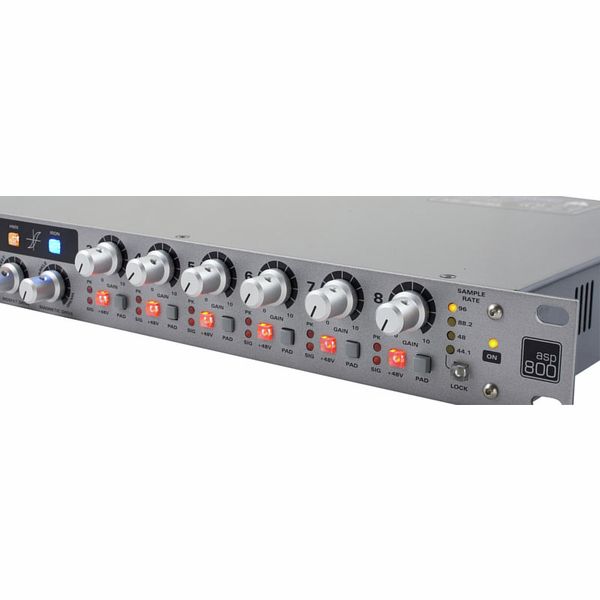
Describing the Audient ASP800 simply as an eight-channel microphone preamp would be selling it short, as this 19" rack-mount unit offers considerably more than straightforward signal amplification. Alongside high-quality Burr Brown A/D converters with a dynamic range of 116dB, this device features two JFET DI inputs and two "Retro" channels, allowing users to introduce their preferred tonal character with HMX and IRON. Each channel also includes a compact metering section with LEDs for signal and peak levels, a -15dB pad, and independently switchable phantom power.
)
Dual-stage saturation
All eight of the ASP800's channels feature Audient's Class A console microphone preamplifiers, known for their fast response and neutral character, with a gain range of 0–70dB. The inputs are equipped with XLR and jack sockets, while the analogue outputs use DB25 connectors, and the first two channels additionally feature the HMX and IRON circuits, designed to evoke the character of 1960s and 1970s equipment. Their intensity can be adjusted using two dedicated "Colour" controls, with HMX adding a subtle low-end enhancement and IRON introducing more pronounced tonal changes through two distinct saturation options per channel, providing considerable flexibility for shaping the sound.
)
For pros and prosumers
The ASP800 offers considerably more than a conventional multi-channel preamp, combining the professional, neutral-sounding Class A preamps found in Audient mixing desks with the additional sound-shaping options provided by dual-stage saturation on the first two channels and Burr Brown A/D converters. This combination provides plenty of flexibility in both sound design and connectivity, while its three-figure retail price makes it an appealing option for serious enthusiasts and professional users alike.
)
About Audient
The British company Audient has its headquarters in Hampshire and has been developing professional audio equipment since 1997. Their early success was achieved with the large-format, analogue inline console ASP8024, whose simple design and outstanding sound characteristics are still the trademark of Audient's product range today. Since then, they have developed a whole range of audio interfaces, microphone preamps and DAW controllers, while of course still manufacturing high-end consoles. Audient thus combines traditional analogue recording technology with cutting-edge, innovative and user-friendly digital technology for computer-assisted music production. The ASP preamp modules series and iD desktop interface series are among Audients’ most successful products.
Setup expansion for a range of new options
The Audient ASP800 is ideal for expanding an existing studio setup, providing eight additional channels via ADAT when connected to a compatible audio interface, with sampling rates of up to 96kHz supported through SMUX technology. For users of an iD14 audio interface, this makes it possible to expand the available preamp channels to ten and record sources such as a full drum kit across multiple tracks. The two Retro channels are particularly useful for adding a touch of colour to selected drums during recording, while the neutral character of the Class A preamps makes the ASP800 equally suitable for a wide range of other instruments.
)
In the spotlight: HMX and Iron
HMX is based on discrete MOSFET (metal oxide semiconductor field effect transistor) technology, which produces asymmetrical harmonic distortion and, as the control is increased, gives the signal a rich character reminiscent of a valve circuit. IRON, by contrast, combines a transformer with a MOSFET driver network, with its control simultaneously affecting input impedance, bass response, treble attenuation, phase shift, magnetic saturation, and transient shaping, resulting in a more pronounced and assertive sound through the interaction of these various parameters.